







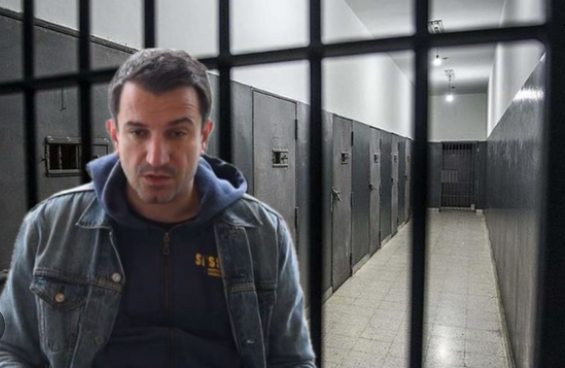
Veliaj’s transfer from the Durrës prison to Fier has opened a debate that already goes beyond the prison administration. The request by Fatmir Xhafaj and Bledi Çuçi for information and documentation has turned the treatment of the Tirana mayor into a matter of parliamentary oversight of the Socialist government.
The political question is direct: what is happening inside the PS when two committee chairs urgently demand explanations from the Minister of Justice about the treatment of one of the party’s leading figures?
According to reports from the parliamentary group meeting, Çuçi asked Minister Toni Gogu for the transfer documentation, also raising the demand for resignation if he did not have the relevant information. Although these details come from sources close to the meeting, they point to a tension that deserves a public response, even though so far efforts have been made to keep it hidden within the majority.
The written request by Xhafaj and Çuçi gives this reaction institutional weight. A debate at a meeting can be extinguished with a clarification between colleagues. An official request for documentation demands answers, arguments and accountability.

The General Directorate of Prisons says the transfer was carried out for security and the smooth running of institutions, according to procedures, and that the order is included in documents classified as “state secret.” It also rejects claims of irregular treatment, explaining that Veliaj was initially placed in the admission sector and then assigned according to an individual assessment. These are official explanations that now need to be verified by the responsible institutions.
But what “state secret” is there in this case regarding the transfer of mayor Erion Veliaj from the cell in Durrës to the cell in Fier?! So far there is no fact showing that SPAK requested this transfer. Nor is any fact given showing that there were security problems for Veliaj in Durrës.
A general explanation about security does not automatically close the debate on the specific reason for the transfer. Likewise, classifying a document as secret should not serve as the final answer to every question. This is precisely where the request of the two deputies gains importance: the limitation of information must be justified, and the part that can be made available must be provided.
At this point, the Veliaj case also becomes a matter of the relationship between Parliament and the executive. Will the committees exercise oversight to the end? Will they receive the documentation and draw conclusions? Or will the reaction remain an episode of solidarity, without a verifiable result?
Politically, the intervention by Xhafaj and Çuçi shows that within the majority there are leaders who demand explanations about the way Veliaj is being treated.
Taulant Balla has called for verification, linking the case to the treatment standards for every pretrial detainee. This is a position that must be measured by the actions that follow: what will be checked, what will be clarified, and who will be held responsible if violations are found.
Edi Rama also faces a political test. The way his government responds to parliamentary oversight will show how much room the majority has to hold itself accountable. If the documents prove the procedure was regular, they should serve to clear up doubts. If they prove violations, responsibility must have names attached.
Veliaj’s rights do not depend on political sympathy for him. Verifying the conditions and procedures of pretrial detention does not prejudge the criminal process and does not replace justice. The same standard must apply to every person in pretrial detention.
Today we have a clash that has moved from internal discussions to official letters. Whether it remains a momentary reaction or turns into a sustained demand for accountability will show how persistently Xhafaj and Çuçi pursue answers.
The PS is entering a major test within its own ranks, facing the protest and many other problems, so this story does not seem likely to pass easily.