







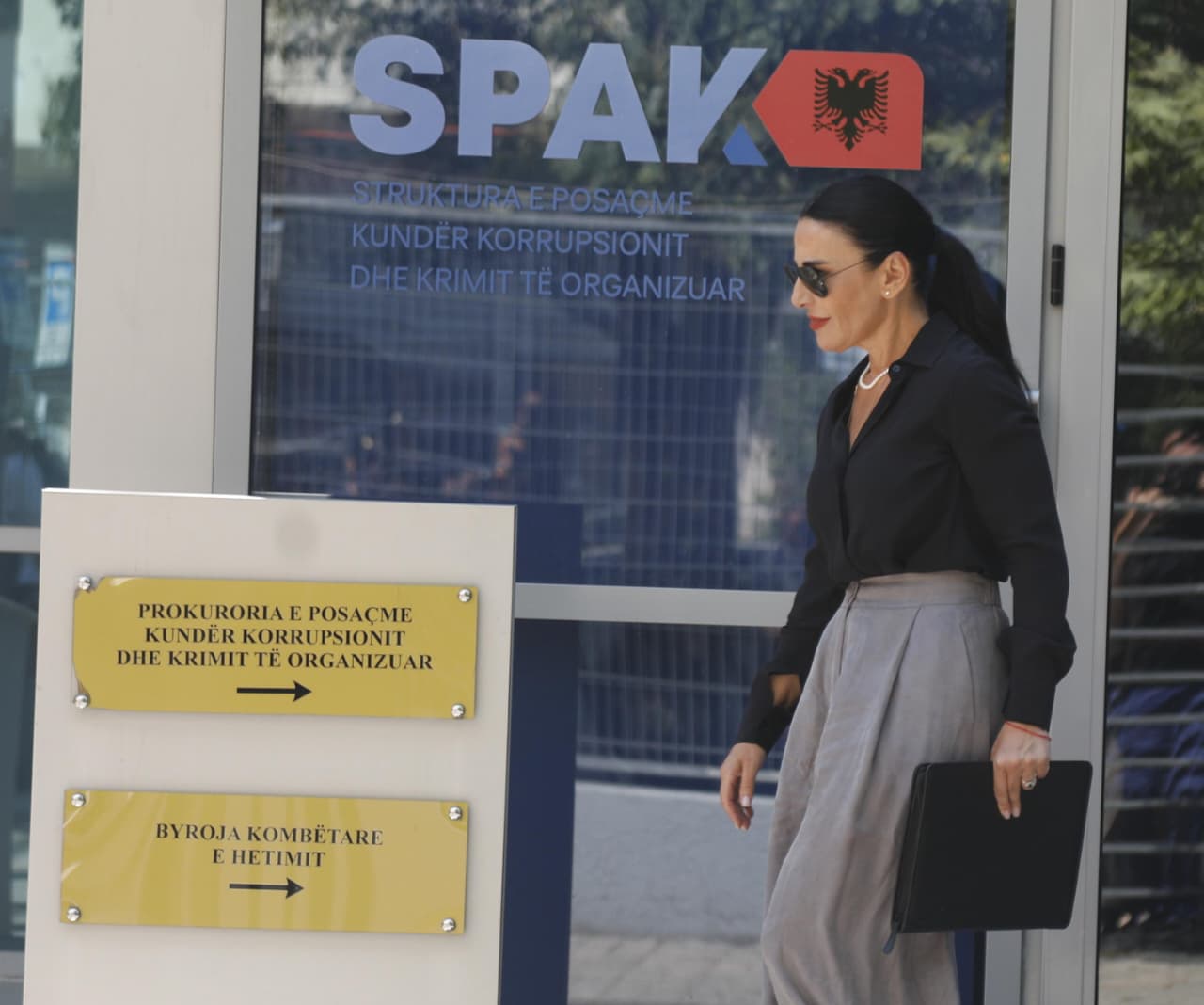
The European Commission has raised concerns about the rule of law in Albania, including the case of Belinda Balluku, against whom SPAK has brought charges.
In its progress report on Albania, the EC stresses that the decision not to lift Balluku’s immunity raises questions about the functioning of checks and balances between branches of power, as well as about the application of the principle of equality of citizens before the law.
The report’s criticisms do not stop at this case alone. The European Commission also highlights weaknesses in parliamentary oversight of the government, noting that the Assembly’s control over the executive remained limited.
Excerpt from the progress report on Albania
Parliamentary oversight of the executive remained weak. In September 2025, no meaningful debate was held on the new government’s programme. Appearances by members of the Council of Ministers during parliamentary question sessions were irregular.
Most legislative initiatives were submitted by the Council of Ministers. Even where initiatives were submitted by Parliament, they mainly came from the party in power. This weakened the role and accountability of Parliament in the legislative process and limited dialogue between political forces.

Opposition requests to set up parliamentary inquiry committees were systematically rejected without any debate.
After a long delay, Parliament voted against SPAK’s request to lift the immunity of a deputy, despite repeated opposition requests to convene the Committee on Rules, Mandates and Immunity.
This raises concerns about the functioning of checks and balances between branches of power, as well as about respect for the principle of equality before the law.