







Russia is preparing to launch a nuclear-armed satellite into space later this year, a scenario that could pose a significant threat to global communications. German media, citing assessments by Western intelligence agencies, have reported that such a satellite, called Sputnik-S, could be launched within 60 days and would become operational immediately afterwards. Reports by German broadcasters NDR and WDR, as well as the Süddeutsche Zeitung newspaper, stressed that Western intelligence services, including Germany’s Bundesnachrichtendienst (BND), had exchanged information indicating that the satellite had been assembled several years ago and is located in the Moscow region. A German government spokesperson stated that the intelligence reports were being taken “very seriously”.
In space, where there is no atmosphere, a mushroom cloud does not form. Instead, energy from a nuclear explosion is released as radiation. An explosion would be particularly destructive in low Earth orbit (LEO), or up to 1,200 miles above Earth, where most satellites operate. Jonathan McDowell, astrophysicist and honorary professor at Durham University’s Space Research Centre, explained that the main effects would be twofold: anything within the line of sight of the explosion could be hit by X-rays and other forms of radiation, damaging satellites within thousands of miles; second, radiation particles could be released into the lower atmosphere and form a “new Van Allen belt,” a term for two radiation belts that surround Earth and protect it from the impact of solar storms.
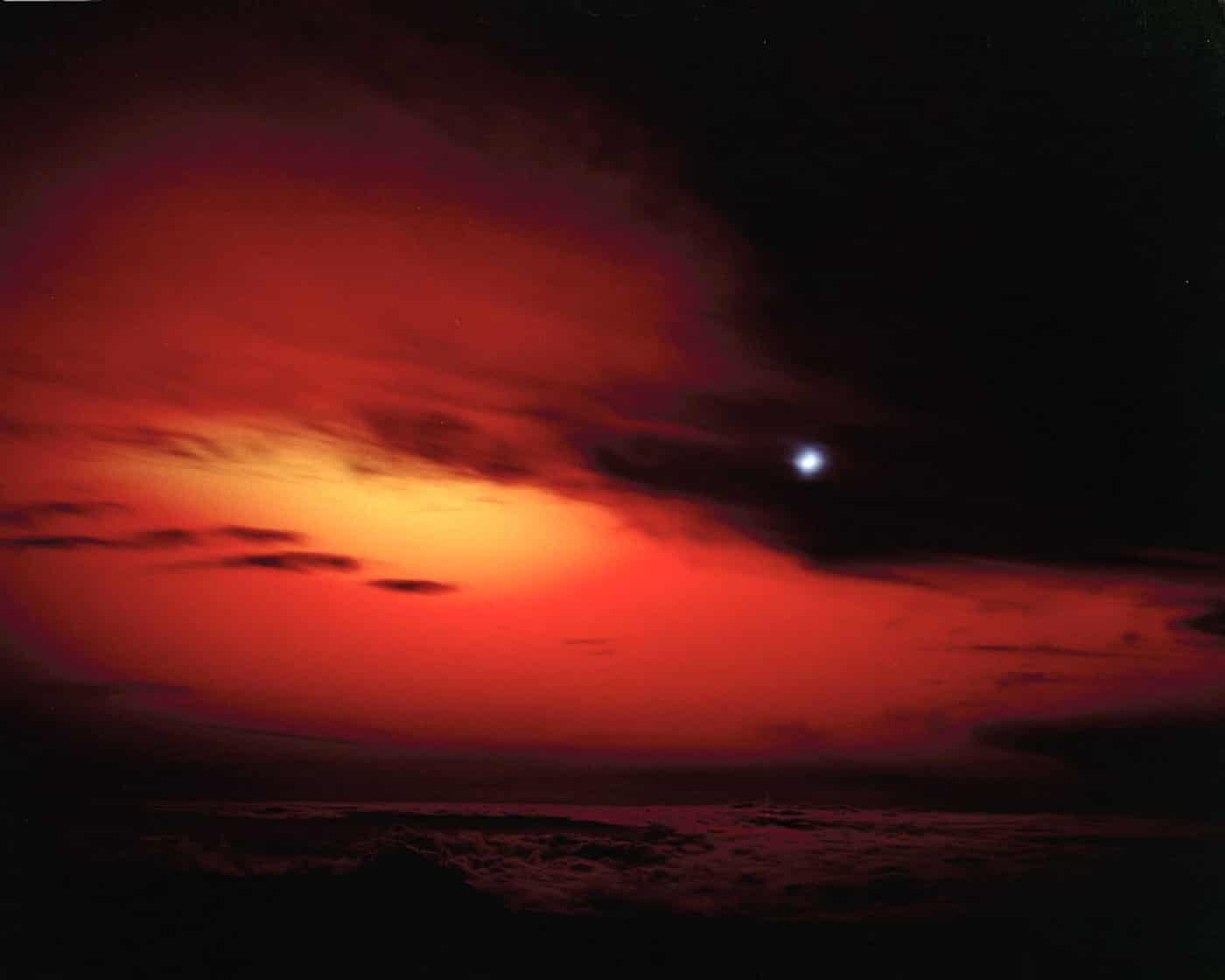
This would be a repeat of a 1962 event, when the US detonated a thermonuclear bomb 250 miles above Earth’s surface – in low Earth orbit – in an event called Starfish Prime. At the time there were far fewer satellites, but it shortened the lives of two spacecraft: the Telstar 1 and Ariel-1 satellites. McDowell stressed that “Starfish caused severe radiation for a period of months in at least half of the satellites operating in orbit at the time.” Keith Ryden, professor of space engineering at the University of Surrey, added that satellites in low Earth orbit are susceptible to radiation bursts, as they are not designed for high radiation levels.

Currently, about 17,000 satellites are located in low Earth orbit, including satellites important for weather forecasting, climate monitoring and the military, as well as Elon Musk’s satellite network that forms the Starlink broadband network, essential for helping Ukraine. The International Space Station, in which Russia is a partner, is also located in low Earth orbit. Satellites used for television broadcasts, GPS and other communications are located in higher orbits, which are less susceptible to a nuclear weapon. McDowell said the artificial Van Allen belt caused by Starfish Prime lasted for five years, adding that “there will be immediate impacts from an explosion, but there are long-term environmental effects that will damage satellites in the long term. It may take several years, up to a decade, for the trapped particles to disperse from the radiation belt.” Ryden stressed that “the space industry would not have the capacity to rebuild and launch the required number of spacecraft in a short time.”
Hundreds of miles below the Starfish Prime explosion, streetlights in Hawaii went out, burglar alarms were triggered and telephone calls were cut off. McDowell said that “there could be an impact on computers and electronic systems in the ground area where the explosion is visible.” Ryden added that the location of the explosion was key, as previous tests were conducted over sparsely populated areas. A European security official told The Guardian that he was doubtful that Russia would detonate a nuclear device in space, as this would cause considerable damage not only to Western economies, but also to Russia itself and its satellites, as well as potentially those of China. “It would be like shooting yourself in the foot,” they said, comparing it to Russia’s “bluff” in 2022 when it placed nuclear forces on high alert. McDowell also expressed skepticism, calling it an idea “so crude” to carry out an act that would be seen as an act of war.
Source: The Guardian