







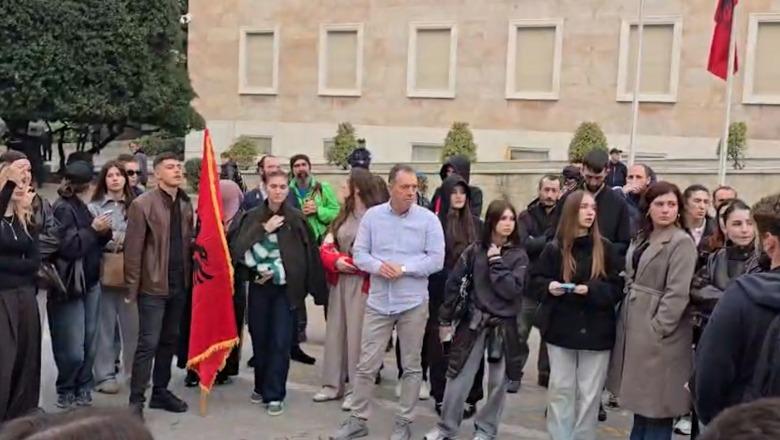
Tensions and the lack of clear coordination marked the meeting of protesters gathered today on the boulevard in front of the Prime Minister’s Office. Facing the concrete table set up by Prime Minister Edi Rama as an invitation to dialogue, a group of protesters demanded a closed-door discussion, without the presence of cameras and media. The aim of the meeting was to clarify the organization of the protests, especially setting an official schedule for gatherings on weekdays and at weekends. The lack of a shared calendar appears to have become one of the main problems of the movement.
During the discussions, disputes also emerged over the identity of the protest. Among participants there was disagreement over its name: whether it should be identified as a student movement or as part of the so-called “flamingo revolution”. “The movement belongs to all of Albania, it does not matter whether they are students or not,” one of the protesters declared, calling for the focus to be on organization rather than divisions between groups.
However, this statement was met with objections from young people present, who reacted by chanting “The students speak”. Another participant asked for concrete proposals, responding with the words: “Offer solutions, not speeches”. Clashes continued over the identity of the groups in the square. “We in the square are the eagle, we are not flamingos,” said one young man, drawing a distinction between student protesters and groups that have been part of the protests known as the “flamingo revolution”.

Some participants proposed that decision-making be moved to the faculties, where students could discuss directly and come up with concrete proposals. “This is a students’ meeting, what business do the others have?” was another reaction during the discussions. Also present at the meeting was former Democratic Party deputy and member of the Democratic Party’s National Council, Aleksandër Biberaj, a lecturer at the Polytechnic University. He suggested holding meetings with professors in the faculties as well, with the aim of creating a representative body.
The meeting took place in a tense atmosphere, with participants repeatedly interrupting one another and raising their voices in defense of their positions. On the day universities across the country ended a boycott of several days, the discussion on the boulevard highlighted the challenges facing the protest movement: the lack of unified coordination, debates over representation, and the difficulty of reaching a common position.