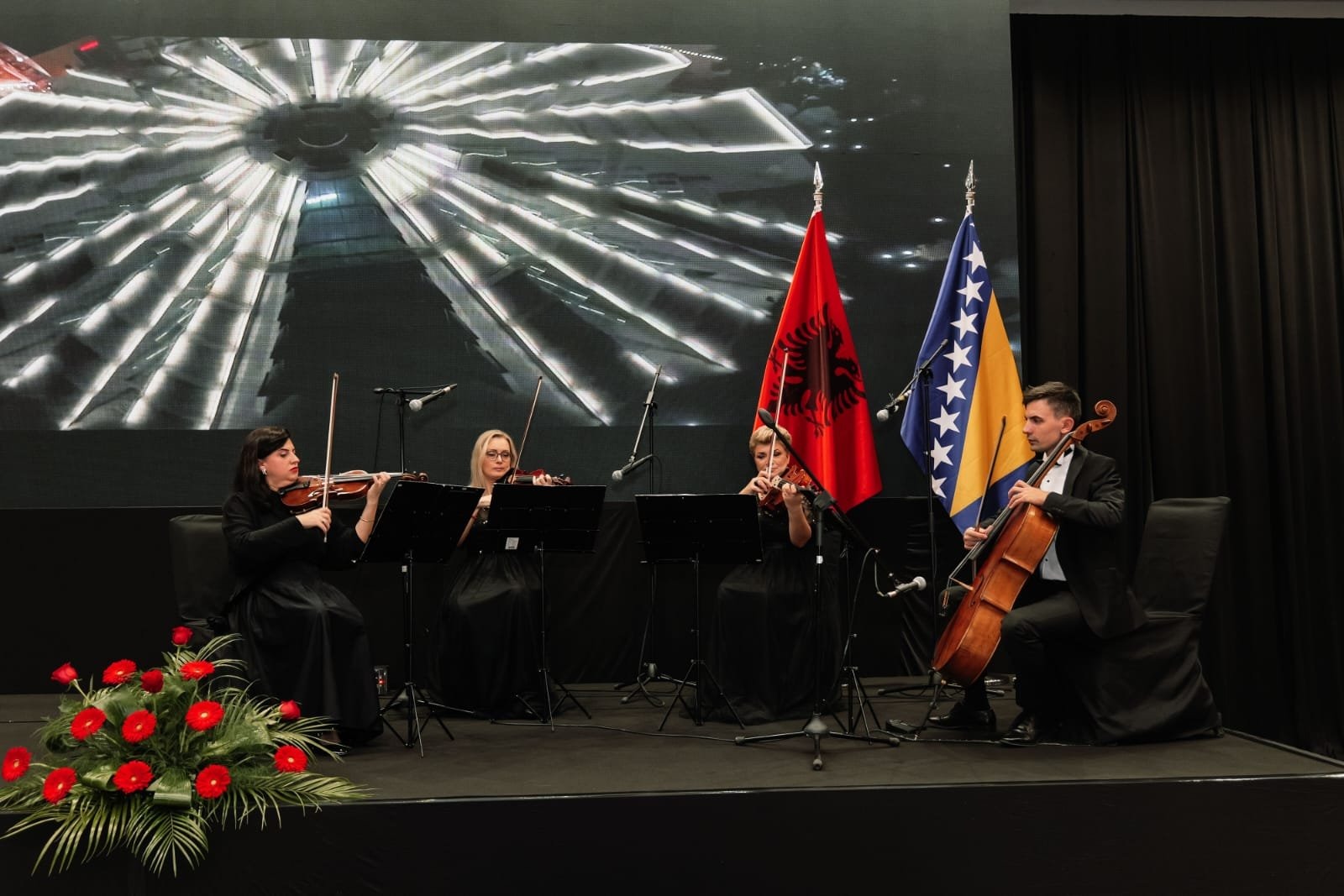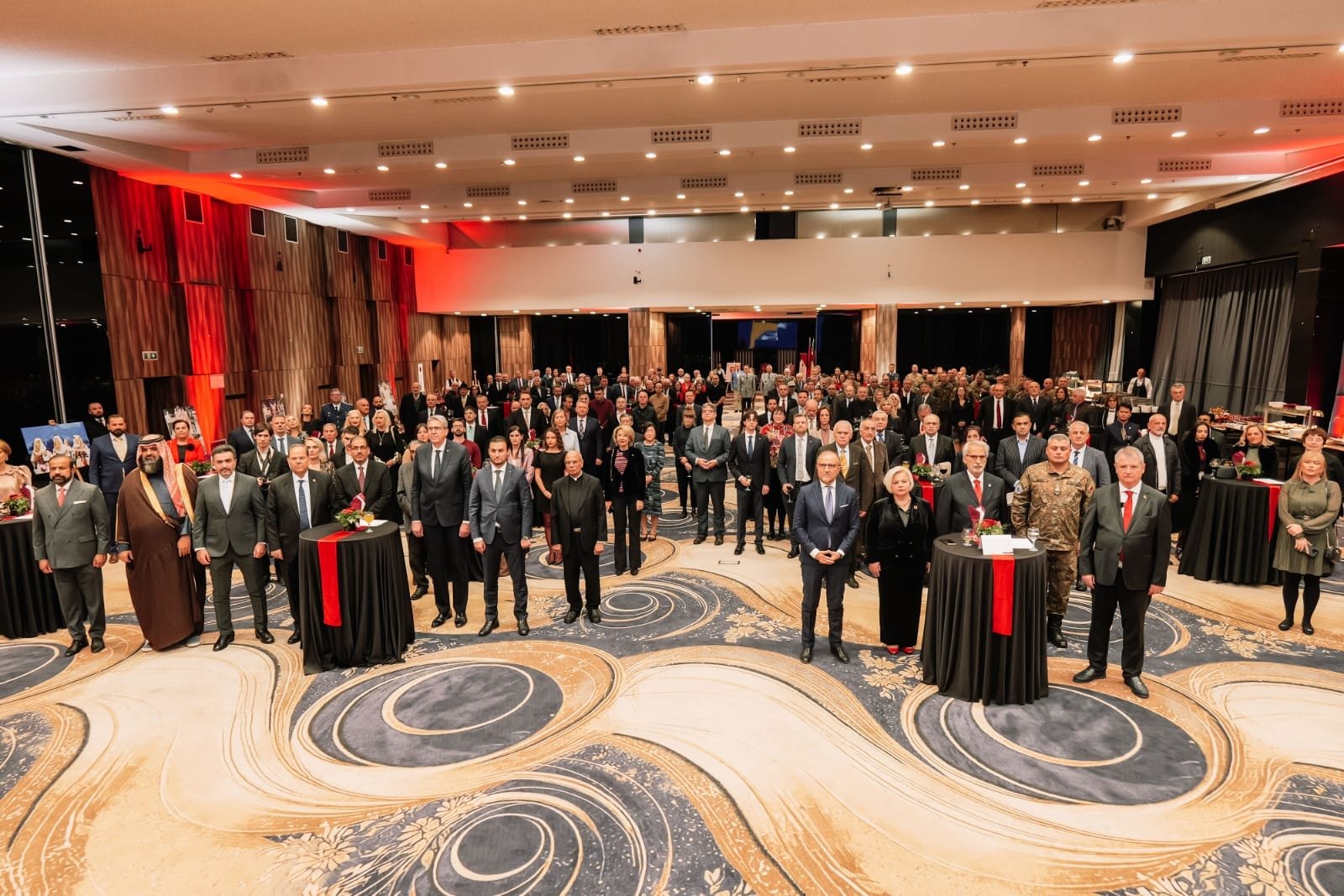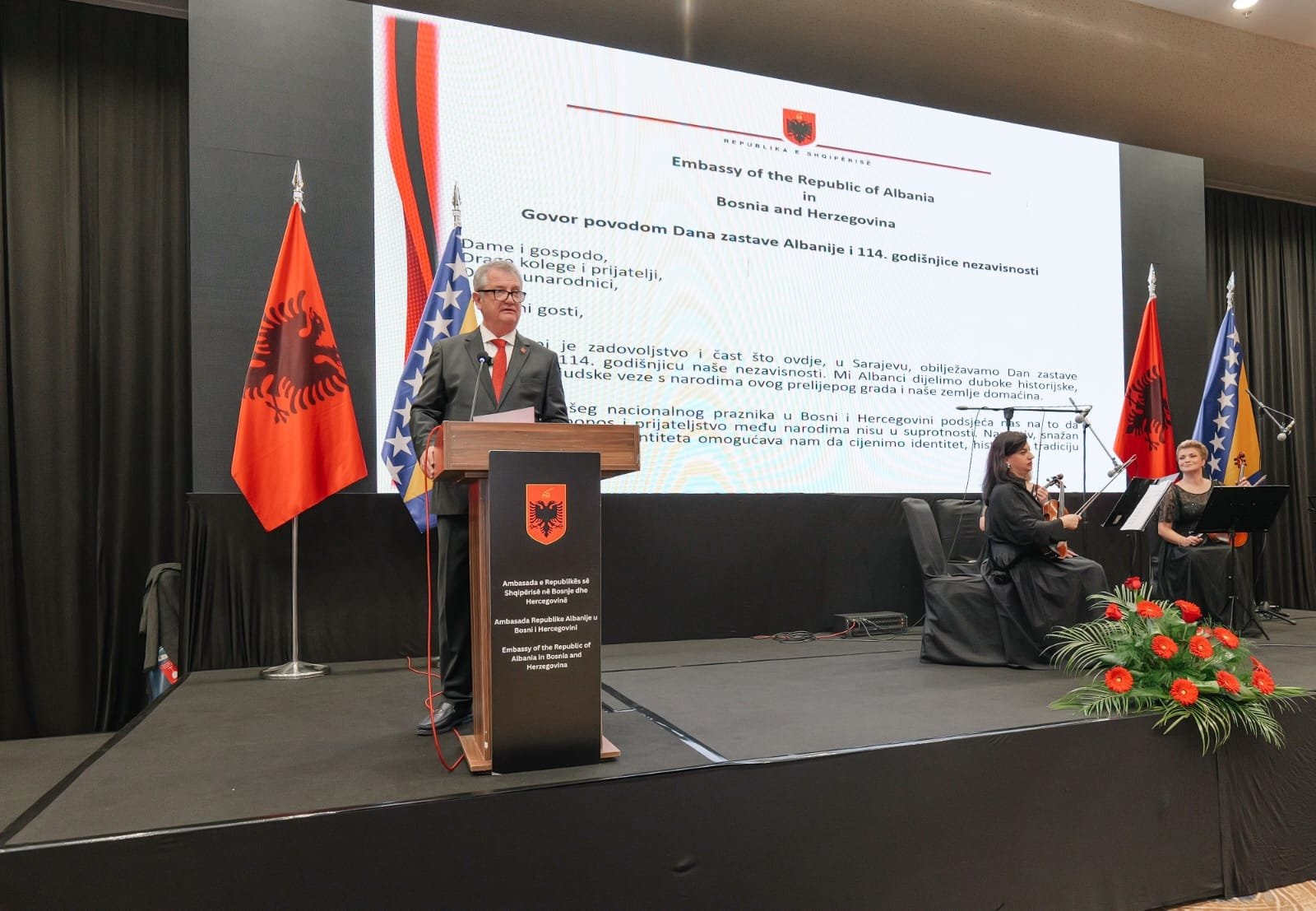
On November 26, the Embassy of the Republic of Albania in Sarajevo celebrated the 114th anniversary of Albania’s Independence in a festive and friendly atmosphere. For Albanians living in the capital of Bosnia and Herzegovina, this celebration has a special meaning. The red-and-black flag reminds them of the land of their ancestors, while the city where they celebrate is the place where they have raised their children, worked and shared even the hardest days with their neighbors. This meeting between two identities was given voice by Albania’s ambassador, Spiro Koçi, when he spoke of national pride as a feeling that helps us appreciate the history and dignity of other peoples.
In Sarajevo, this idea also gains meaning through names familiar to the Albanian public. Bekim Fehmiu, Tinka Kurti and Robert Shvarci were born in this city. Anyone who has watched Fehmiu and Kurti on screen, or has read in Albanian a work translated by Shvarci, has something familiar in this city, even if they have not yet visited it. The ambassador also recalled Gjergj Fishta, whose formation was marked by the cultural and intellectual environment of Bosnia and Herzegovina at the end of the 19th century. Long before Albania and Bosnia and Herzegovina gave their relations a diplomatic form, artists, translators and scholars had already written a part of their shared history.
But the most vivid memory of these ties was among the compatriots to whom Spiro Koçi was speaking. The ambassador expressed gratitude for the Albanians who, generation after generation, have contributed to the economic, social and cultural life of Sarajevo. He singled out the courage and solidarity they demonstrated in the city’s hardest days. This appreciation gave respect for the diaspora a fully human meaning. To preserve your language and customs while being close to your neighbor when he needs you is perhaps one of the most beautiful ways of being Albanian and a citizen of Sarajevo.
The more than sixty-year work of Albanian organizations also has its part in this heritage. From Sarajevo to Tuzla and Mostar, the Association of Albanians of Bosnia and Herzegovina, the Albanian Cultural Society and other associations have passed on to generations the language, traditions and sense of belonging. For a child growing up far from Albania, the opportunity to hear and speak Albanian even outside the home door is owed, to a good extent, precisely to this daily work.
When he spoke about the closeness between the two peoples, Koçi brought up a detail familiar in both countries: the invitation to coffee. In Tirana or Sarajevo, this invitation implies the time we devote to the other to listen, to share a concern or to find common ground after a disagreement. With the same warmth, the ambassador invited friends from Bosnia and Herzegovina to visit Albania, reminding them of the Albanian saying, “The Albanian’s home belongs to God and to the guest.” Tens of thousands of them have already come to know the Albanian coast and hospitality. For Albanians too, Sarajevo is increasingly becoming a city they want to visit and return to.
At this point, the ambassador’s words took a concrete direction. As citizens are discovering the path toward each other themselves, it is up to the authorities to make it easier. Spiro Koçi called for improving infrastructure and transport links between the two countries, alongside expanding trade and investment. For the family planning a trip, for the entrepreneur seeking a partner and for the young person who sees opportunities for cooperation beyond the border, good neighborliness gains value when travel is made easier and a joint initiative can be put into practice.
This relationship also includes a responsibility for peace. Greeting the Albanian military personnel serving in Butmir as part of the EUFOR Althea operation, Koçi recalled that Albania is making its contribution to the security of Bosnia and Herzegovina. For Albania, he stressed, the stability and prosperity of the friendly country matter in themselves and directly influence the future of the entire Western Balkans.
For Europe, the ambassador chose to speak through music. He expressed confidence that, by the end of his mandate in Bosnia and Herzegovina, after the Albanian national anthem, the sounds of Beethoven’s Ninth Symphony will be heard. In this vision of a future ceremony, Koçi summed up his hope for Albania’s membership in the European Union. The wish was addressed at the same time to Bosnia and Herzegovina as well, that it may advance on its European path and that all its citizens may enjoy the fruits of this progress.
At the end of his speech, Spiro Koçi thanked by name the people who had worked for that evening—Xhemina, Ajla, Etleva and Amir—expressing special gratitude to Anita for her work in rebuilding Albania’s diplomatic presence in Sarajevo. It was a closing that suited this celebration. After having spoken of flags, states and anniversaries, the ambassador returned to people. And after offering congratulations in Albanian for Albania’s Independence and for the friendship between the two countries, he said his final words in the language of his hosts: “Hvala vam puno!” Thank you very much!