







U.S. President Donald Trump has blamed immigration for the wave of unrest that has engulfed France, calling on French authorities to close the borders and take control of the situation. His statement comes after several weeks of protests against rising living costs and the deterioration of public services, which have escalated into violence in some of the country’s major cities.
In a reaction published on Sunday on the Truth Social platform, Trump wrote: “France is burning!”, claiming that immigrants from different cultures have contributed to the worsening of the situation in the country.
“The immigration of people from a completely different world, people who have hatred in their hearts, has destroyed that once great country,” the U.S. president said.
He urged French authorities to take immediate measures, stressing: “Close the borders and take control, before it is too late!”.
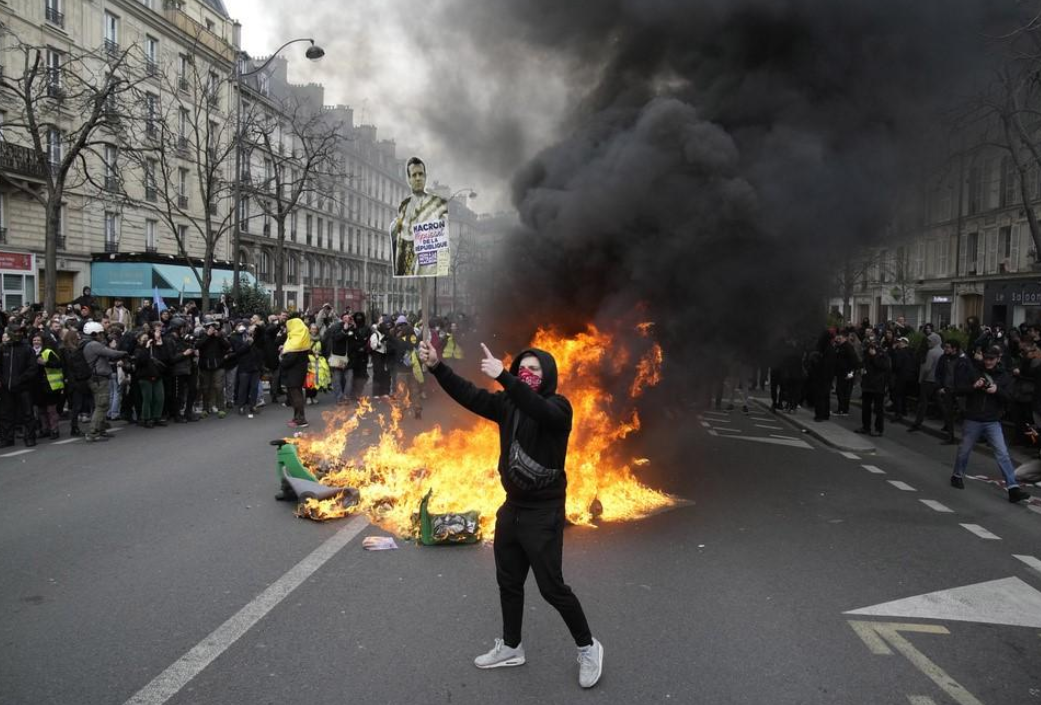
Trump’s reaction comes after one of the most violent days of civil unrest in France in recent years. The protests, which had been ongoing for several weeks, escalated on Saturday, when public buildings were set on fire, shops were looted and protesters clashed with police forces.
Public buildings in flames, protests escalate into violence
In the city of Limoges, in central France, a fire engulfed the city hall building, a 143-year-old structure, on Saturday. Footage published showed the moment the top of its tower collapsed, CNN reported. Meanwhile, in Marseille, masked people dressed in black forcibly entered the city hall building and destroyed its premises. In Lyon, the city’s tourist office was also engulfed by fire, while violence spread through the streets. Footage from the affected cities shows the extent of the damage to public buildings and private property, while the situation has raised concerns about security and the authorities’ ability to curb the escalation of the protests.

From student protests to widespread social discontent
The protest movement began last month among high school students in the northern suburbs of Paris, areas affected by economic and social hardship. The initial discontent was linked to a shortage of teachers and the worsening of conditions in schools, but the protests later expanded, encompassing opposition to inequality, rising living costs and the decline in the quality of public services.
Although most demonstrators have protested peacefully, smaller groups have been involved in violent clashes with police, have damaged public buildings and have looted shops, including luxury boutiques and supermarkets. French authorities have reported attacks on police officers, media workers and public property in several cities. Meanwhile, security forces are trying to bring the situation under control and prevent further spread of violence. Trump’s statements have placed immigration at the center of the debate over the causes of the unrest, although the protests, according to the reported material, began due to dissatisfaction with education, the cost of living and public services.