







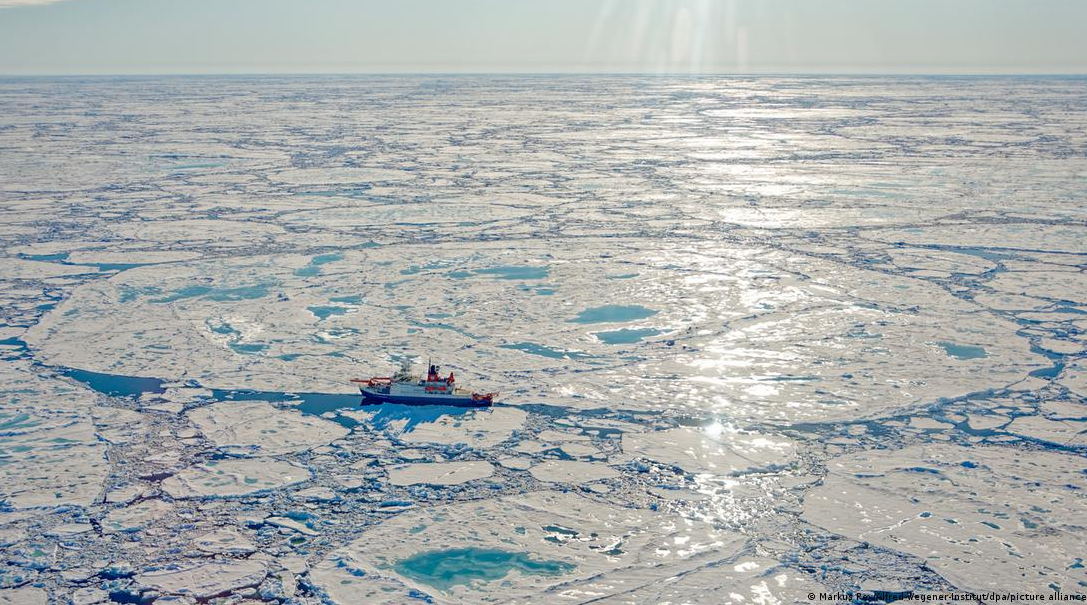
-Reported by German broadcaster DW-
The impacts of global warming are becoming increasingly devastating. The target limit of 1.5 degrees, agreed at the 2015 World Climate Conference in Paris, will almost certainly not be reached.
The commitments presented at the 2015 World Climate Conference in Paris will almost certainly not be met. Progress has been made, but not as much as targeted while time keeps passing.

UN Secretary-General António Guterres stated that the world can no longer avoid warming of 1.5 degrees compared with the pre-industrial period. According to him, the consequences are already visible: the crossing of the limit has brought deadly floods, extreme heat waves, devastating forest fires, loss of human lives, major economic damage and a deepening of social inequalities. He warned that those who have contributed least to climate change are the first to suffer and suffer the most from its consequences.
According to a report by the United Nations Environment Programme (UNEP), to limit global warming to around 1.7 to 1.8 degrees by the middle of the century, global greenhouse gas emissions must fall by more than 6 percent every year until 2035, compared with 2025.
In reality, emissions continue to rise from year to year, mainly due to the use of coal, oil and gas.
However, UNEP Executive Director Inger Andersen stressed that there are positive developments. Since the Paris Agreement, global capacities for renewable energy and electricity production have grown three times faster than had been projected. Solar energy (photovoltaic) has expanded even seven times faster than initial expectations, while the growth in coal use has been slower.
The world is heading toward 2.8 degrees
The UNEP report estimates that, if governments continue with current policies, the average global temperature could rise by up to 2.8 degrees Celsius by the end of this century.
Even if states fulfill their current climate pledges, warming could be limited only to about 2.1 degrees.
Guterres warned that “the emissions gap has turned into a leadership gap,” adding that the world is running out of time and that there are excuses for not acting. He called on governments to take bolder and faster measures.
An opportunity for new steps will be the 31st World Climate Conference, which will be held in a few weeks in Antalya, Turkey. The organizers have called for a global target on electrification.
However, environmental organizations warn that such a target only makes sense if it is accompanied by the expansion of clean energy production from wind and solar. Another key issue remains financing from industrialized countries for climate measures and adaptation to climate change in developing countries.
The dramatic images of the floods in Valencia these days clearly illustrate the warnings of the UN report. Therefore, Guterres’ message ahead of the climate summit is clear:
“Every fraction of a degree matters. Every year of delay makes the path back harder. Let us close the gap now.”/DW/