







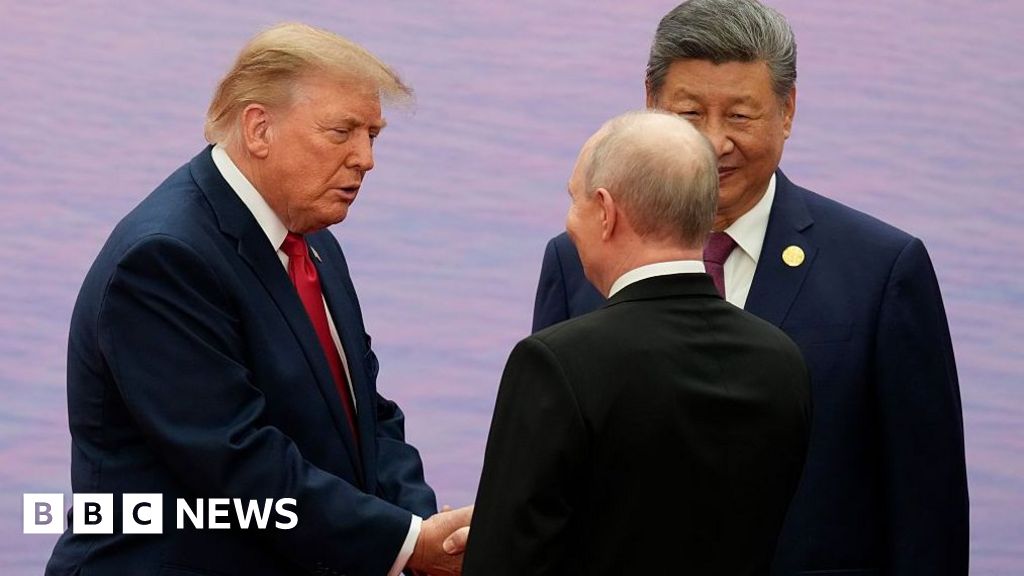
Xi Jinping believes he has achieved an unprecedented diplomatic success by organizing a historic summit with Vladimir Putin and Donald Trump in Shenzhen. This meeting, held against the city’s futuristic backdrop of advanced technology, serves as a clear demonstration of China’s growing influence in the global economy and politics. For decades, the world order has been shaped by Washington and Western allies, but now Beijing is positioning itself at the center of conversations that are reshaping the international scene, showing that it is no longer merely a responder to others’ decisions.
However, this summit carries considerable risks for Xi, as there are key issues he does not want to discuss. First, China does not want the war in Ukraine, now in its fourth year, to be part of the agenda. Xi faces a delicate balance: preserving the relationship with Putin, an important ally, without damaging ties with Europe, a crucial market for Chinese exports. While Beijing claims neutrality and calls for a political solution, the US and Europe have accused China of supporting Russia with military components and energy purchases, helping the Russian economy. Xi wants to keep Putin close, but not so close that Russia’s problems become China’s problems.
Second, Donald Trump has expressed a desire to discuss nuclear arms limitation. With the New START treaty expiring in February, Washington is concerned about the rapid expansion of China’s nuclear arsenal. Trump seeks China’s inclusion in a new agreement, but Beijing refuses, arguing that its arsenal is significantly smaller than those of the US and Russia, and that it has the right to develop its own capabilities. This issue could undermine Xi’s ambition to position China as a global leader, as the US could argue that this status also requires nuclear responsibilities.

Third, Xi will try to control the narrative and image of the meeting, but will face two unpredictable leaders. Both Trump and Putin have their own agendas, and the American president has threatened to go off script. There is a risk that they will dominate the meeting, leaving Xi to appear as a host rather than the architect of an important diplomatic moment. However, Xi can use this situation to his advantage, portraying himself as a steady global leader surrounded by two men involved in unresolved conflicts, emphasizing his role as a senior statesman.
Despite the attention, the meaningful results from this meeting of three leaders with different agendas are few. However, the power this summit projects is essential for Xi, especially ahead of next year’s Communist Party Congress, where he is expected to secure a fourth term. This event could serve as domestic propaganda to address the major challenges China faces, such as the property crisis, local government debts, slowing manufacturing and youth unemployment. At such a time, a photo with Putin and Trump could offer Xi evidence that China’s “century of humiliation” has ended and that the country is shaping the rules of a new global era.
Source: BBC News