







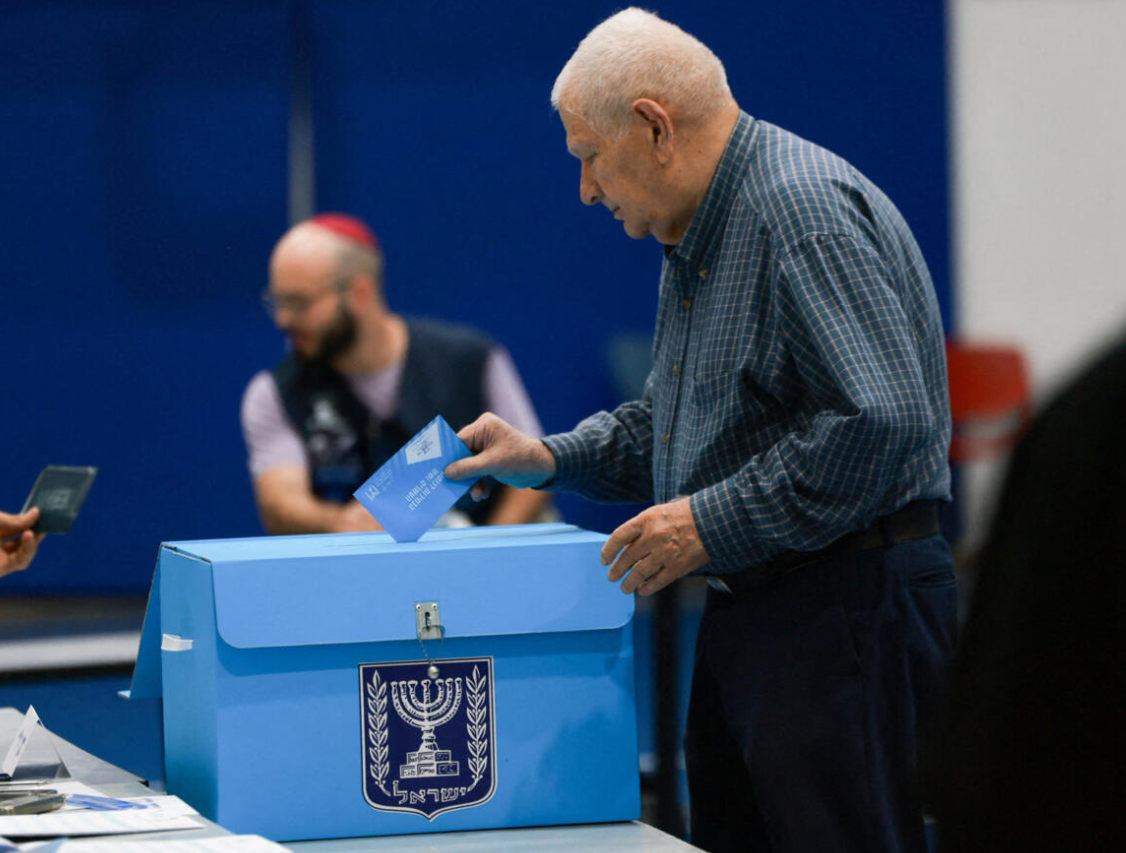
Israel is holding elections of particular importance, in a tense climate following the Hamas attack of October 7, 2023, and the conflicts that followed in the region. Prime Minister Benjamin Netanyahu seeks to secure another mandate, but he faces opponents who demand a change in the country’s political direction. According to the Central Elections Committee, turnout reached 16.7 percent just three hours after the polling stations opened, the highest level for this period since 1981.
Expectations are for a close race, with no winner holding a clear advantage. Netanyahu’s opponents accuse the government of the security failures that preceded the October 7 attack and call for a national inquiry into political and institutional responsibility. On the other side, Netanyahu relies on his long experience in power and on his relations with U.S. President Donald Trump. He presents himself as the most capable candidate to guarantee Israel’s security in the face of external threats.
Gadi Eisenkot, a former Chief of the General Staff of the Israeli army, is also expected to play an important role in the race. He promises a change of political course. He has stated that he aims to dismantle Hamas’s military and governing structures within 18 months of the formation of the new government. Eisenkot has also criticized the results of the war in Gaza, where, according to Palestinian health authorities, the death toll has exceeded 74,000.

Beyond the rivalry between the main candidates, attention has also focused on the vote of Israel’s Arab citizens. Candidate Ahmed Tibi has claimed that this part of the electorate is taking part in the voting at unprecedented levels. However, Eisenkot’s refusal to cooperate directly with Arab parties could make it more difficult to form a parliamentary majority. The outcome of the elections is expected to determine not only Netanyahu’s political future, but also the direction Israel will take in facing security challenges, the consequences of the war and internal divisions.