







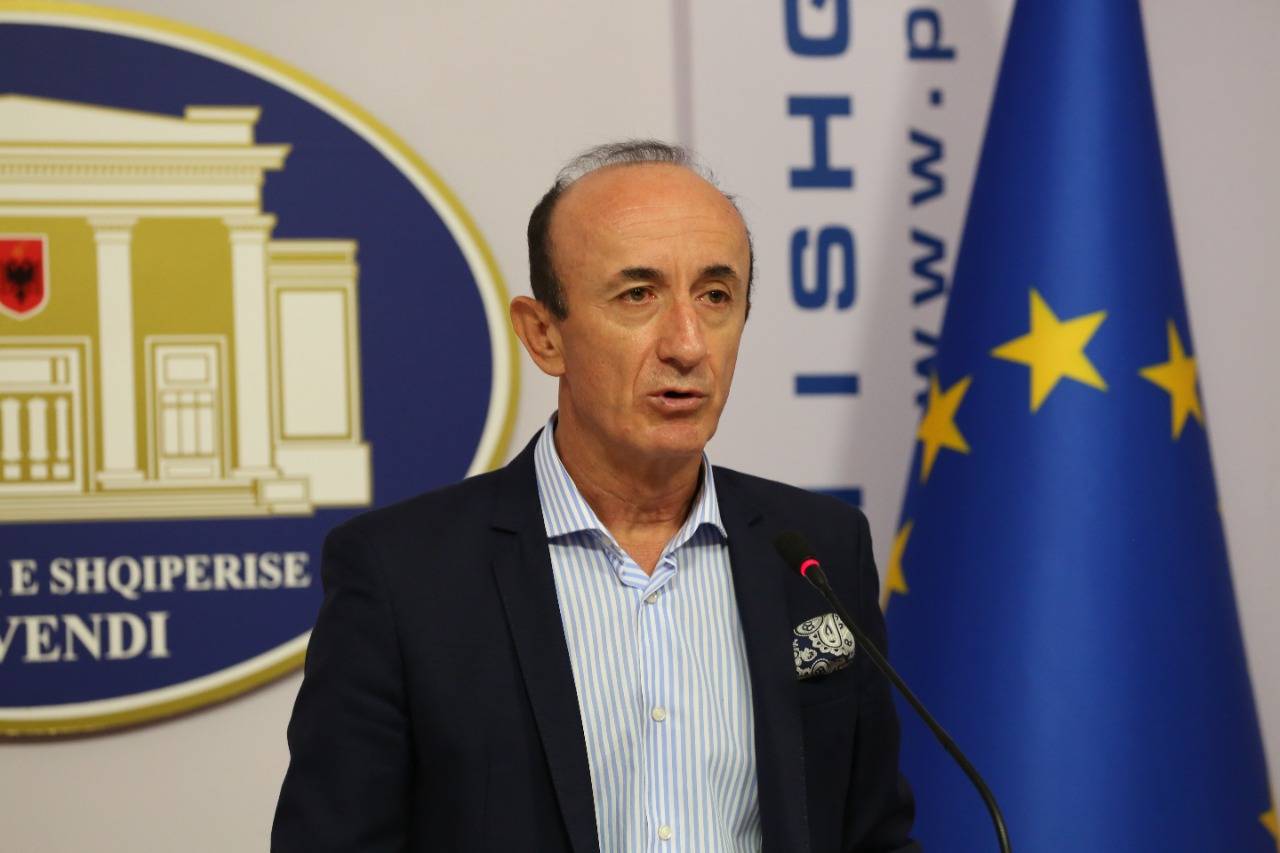
By Dashnor Sula
As a citizen, as a parent, and as a civil servant, I have followed with concern and sorrow the events of these eight days of protest in Albania. After 20 years of active engagement in politics, I fully value citizens’ reaction to injustices. However good a government may be, there can always be reasons to react to those in power. For this reason, I have supported and will continue to understand citizens’ reactions whenever they stem from legitimate grievances and legitimate demands.
Peaceful protest is a constitutional right and an essential instrument of democracy. Citizens have the right to use it whenever they believe the government is not fulfilling its obligations to them. But at the same time, each of us must be guided by a fundamental principle: an injustice cannot be punished with an even greater injustice. The young people who take to the streets must have the assurance that they will return home safe and sound. Just like the protesters, the employees of the State Police also have families who await them and the right to return to them at the end of the day.

Therefore, this is a call that comes from the depths of my soul to all those in the square: to avoid violence, not to let anger reach uncontrollable proportions, and not to replace the power of argument with brutal acts. The arguments of citizens carry far more weight and voice than violence. It is a well-known truth that it can take years to build something, but only seconds to destroy it. Regardless of the extent of material damage, acts of violence set us back and harm not only public and private property but also the climate of social coexistence.
The images from Tirana during these eight days have brought back memories of the COVID-19 pandemic period, when the city’s streets were empty and public life was paralysed. I believe none of us wishes to see such a reality again. I know that many of those who read this statement may criticise me. They may recall the time when, four years ago, I was in Parliament and protested against the same government that citizens now oppose, while today, in my duties as a civil servant, I call for restraint and constructiveness.
In fact, this is precisely one of the motives that drives me to react. Yes, it is true that four years ago I also protested alone in Parliament against problems of governance. I raised concerns and denounced specific issues, and I continue to hold the same position on them. But at a moment when my political contribution no longer carried the weight it deserved, the country’s prime minister, my former political opponent, recognised my credibility and, placing the public interest above political divisions, entrusted me with leadership of the General Inspectorate.
I accepted this challenge with the conviction that the state is built by contributing where you can be useful, regardless of previous political convictions or affiliations. Over these seven months, I have devoted myself entirely to my duty, with the aim of placing one more brick in the construction of a functional, just state that serves its citizens. During this period, the message I have received from the Prime Minister of Albania has been clear: do everything I consider fair and in accordance with the law.
Initially, I had my doubts about whether this stance was linked to the fact that I came from the opposing political camp. But the months have passed and my position has not changed. What has increased is the follow-up of citizens’ concerns, complaints and demands, with the expectation that they be addressed and resolved in accordance with the laws of the Republic of Albania. I am aware that this position may expose me to criticism, but I believe time will be the best judge of my decisions and positions, both regarding what I have said about my former political camp and what I have denounced regarding the current government.
Returning to the situation the country is going through, I want to stress that young people, students and pupils may be right on many of their dissatisfactions and concerns. Their voice must be heard, their demands must be taken seriously, and institutions have an obligation to respond responsibly. But the injustices they denounce cannot be resolved through destruction, violence and harm to people. Violence does not strengthen a just cause; on the contrary, it risks weakening it and diverting attention from the real problems that require solutions. Even in the most serious international conflicts, dialogue remains a necessity for finding a way out. This applies even more to us, who share the same country, the same cities and a common future.
Albania needs more responsibility, more listening to citizens and less confrontation. It needs institutions that reflect, protesters who express their dissatisfaction freely and peacefully, and for no one to see violence as a solution. Restraint and dialogue are not signs of weakness. They are signs of responsibility towards the country and its citizens. Let us listen to one another, respect the right to protest, and not allow today’s anger to destroy what we need to build together tomorrow. Because, in the end, beyond political convictions and the divisions of the moment, Albania is our shared home.