







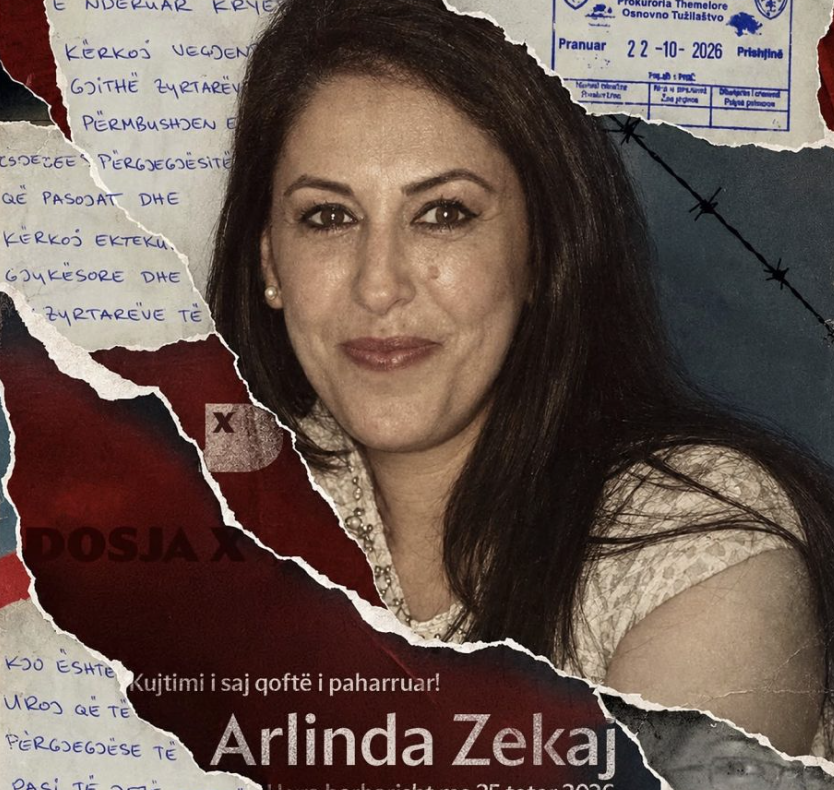
At Radac in Peja, on Tuesday, final farewells were paid to Arlinda Zekaj, the 49-year-old woman who was killed by her brother-in-law. Amid the grief of family members and relatives, calls for justice were heard at the ceremony for a woman who, despite repeated requests for help, was unable to be protected by the country’s institutions.
The grave case is also being investigated with regard to the possible responsibility of the authorities for handling her complaints. On the same day, the Basic Court in Peja held a hearing to determine the security measure against the victim’s former husband, Jeton Sylaj. He appeared before the court under escort from an increased number of police officers. The Basic Prosecution in Peja had requested one month of pretrial detention for Sylaj, on suspicion of failing to comply with a court decision. According to the prosecution’s claims, he is suspected of having again exercised psychological violence against his former wife, now deceased, by threatening her verbally.
The court ordered one month of pretrial detention, due to suspicions of violating the 16 October decision, which prohibited him from approaching the victim at a distance of less than two meters. Albert Sylaj, the suspect in the murder of Arlinda Zekaj, remains at large. Kosovo Police announced on Tuesday that during a raid on his home they had found weapons, knives and an axe. The circumstances of the killing make the tragedy even more severe. Arlinda Zekaj was killed only ten minutes after police had escorted her home, following a report of domestic violence by her former husband.

Just three days before the killing, the 49-year-old had requested state intervention and raised concerns about negligence by officials handling her case. She had written letters to the Chief Prosecutor of Peja, the President of the Basic Court in Peja and the State Chief Prosecutor, asking for protection. These requests, which Arlinda Zekaj herself described as “her last hope,” today bring renewed attention to questions about the institutional response and responsibility for the possible failure to protect her.