







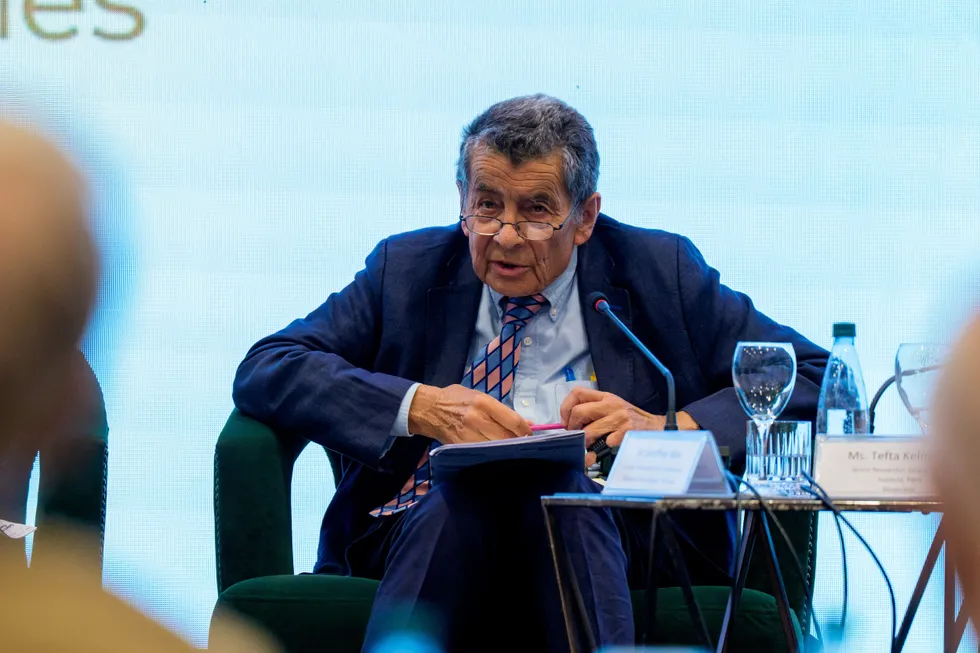
Sir Geoffrey Nice, former prosecutor who led the prosecution of Slobodan Milošević at the Hague Tribunal, stated that Kosovo was forced to accept the establishment of the Specialized Chambers. In a conversation with former Kosovo Foreign Minister Petrit Selimi, he questioned the basis of claims about forced organ transplantation.
According to Nice, the appeal should also examine arguments regarding the court’s independence and impartiality. The interview was published in The Balkan Bubble, where Nice was part of Kosovo’s team in the negotiations on the court’s statute, Telegrafi writes. He said the team had raised objections to the draft statute and that negotiations with Western partners practically ended after these objections.
According to him, the statute was drafted in Brussels and Washington and handed to Pristina. Nice added that Hashim Thaçi had instructed the team to seek stronger procedural guarantees. One of the proposals he said he had defended was oversight by judges of the process through which the prosecution discloses to the defense materials that may be favorable to the accused.
Turning back to the report by Dick Marty, Nice said the way the document was written created the impression that claims about forced organ transplantation were based on evidence. He mentioned the case of the person identified as “K144”, whom Serbian media had presented as a key witness.
According to Nice, the Hague Tribunal did not have a witness with that number. He recalled that in 2014 Clint Williamson, head of the EU investigative task force, had spoken of indications that organ removal may have occurred in a limited number of cases, while saying that the basis for filing an indictment was still not sufficient.
Nice stressed that none of the ten counts of the indictment later filed against Thaçi was related to organ removal. Speaking about the first-instance judgment against Hashim Thaçi, Kadri Veseli, Rexhep Selimi and Jakup Krasniqi, Nice said he had not heard the evidence presented at trial and that their assessment is for the appeals panel.
He noted that the four accused were acquitted of charges of crimes against humanity and that the convictions concerned war crimes. According to Nice, the appeal should also examine arguments about how the court was established and whether it meets standards of independence and impartiality.
He said the appeals judges should also address the argument that the description of the KLA as an organization with a centralized structure does not match the findings of the Hague Tribunal in earlier cases.