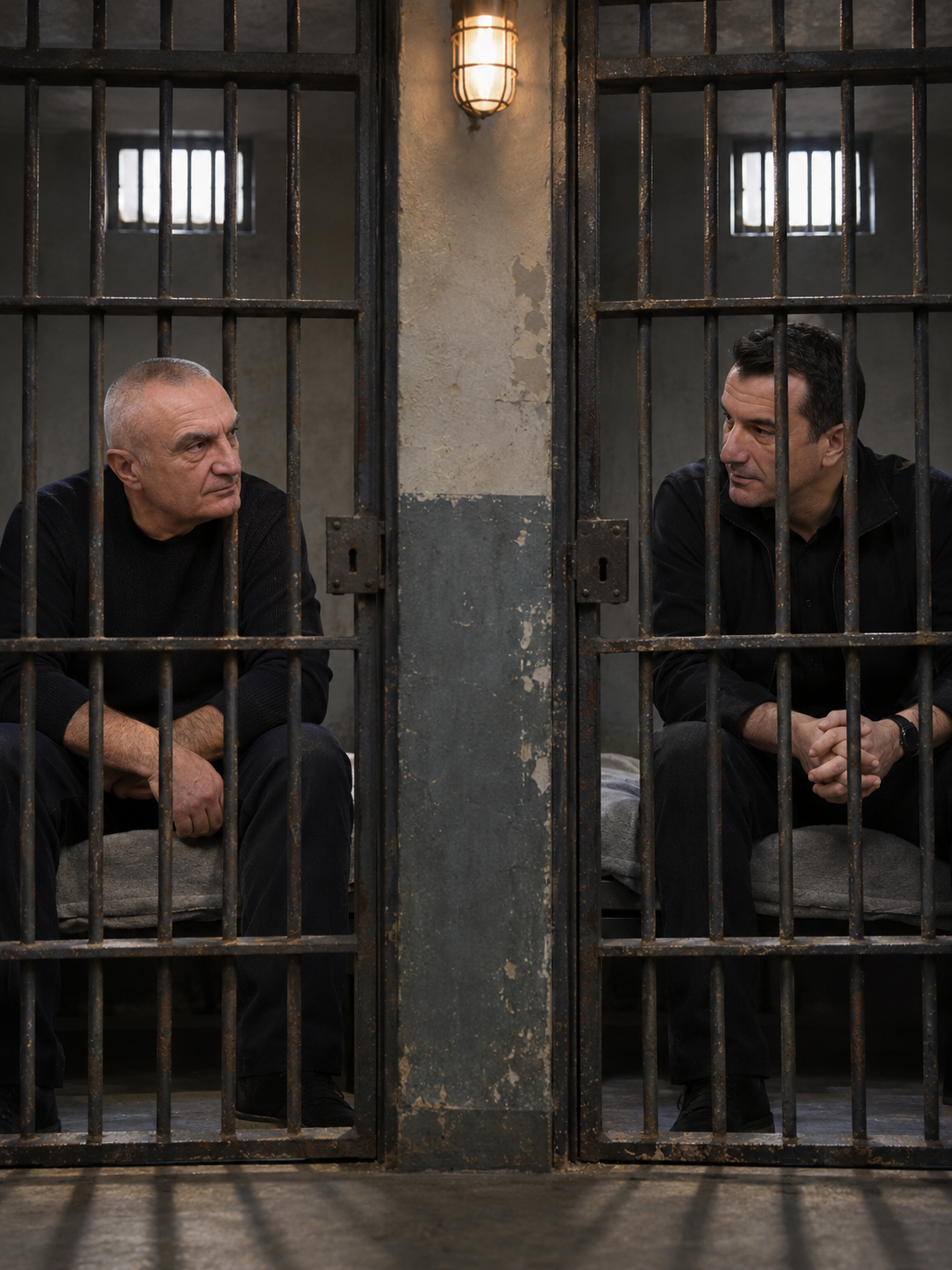
Erion Veliaj and Ilir Meta are in pre-trial detention, but the courts have decided to suspend the detention time limits in the proceedings against them. This means that the time they actually spend in a cell continues, while the legal time limit that caps pre-trial detention stops counting. It is a paradox that demands a public answer: how can it be called justice when a person remains behind bars, but his days do not count toward the time limit?
We are not analyzing the fact that the Constitutional Court has ruled that Veliaj should be investigated at liberty and exercise his duties at the Municipality while the judicial investigation continues in parallel. But strangely, the High Court left him in a cell. Ilir Meta too can and should be investigated at liberty, since there is no evidence he could tamper with or any risk that he would flee, as he was abroad and came to Tirana. So keeping them in detention costs the state, but costs them much more. If they are declared innocent, they will take millions of euros from the state. And these millions will be paid by Albanian taxpayers.
The law allows suspension only under specified circumstances. But this cannot become an automatic mechanism, nor a way to charge every delay in the proceedings to the defendant. Courts must state precisely which concrete actions by the defendant or the defense justify the measure. General formulas are not enough; when liberty is restricted, the reasoning must be strong, individual and verifiable.
If a hearing is postponed because of improper notification, the absence of the judge, a boycott by lawyers or problems in judicial administration, responsibility cannot be blindly billed to the defendant. In Veliaj’s case, problems have been reported with the notification of a hearing or reasons that do not depend on Veliaj; while Meta has opposed the suspension and stated that he was present. The courts have rejected their appeals, but the public deserves to see the full reasoning: which postponements were counted, to whom they were attributed and on what evidence the decision was based.
Pre-trial detention is not a punishment, nor can the trial be dragged out indefinitely. If the state keeps someone in a cell, it must also bear responsibility for the legality and duration of this measure. The detention clock cannot be stopped by an unclear decision, while the person continues to count the days behind bars. The principle of equality before the law requires reasoned decisions, not suspensions that make the legal limit ever more distant.
Apparently, both are suspected of being held largely for reasons of political revenge.