







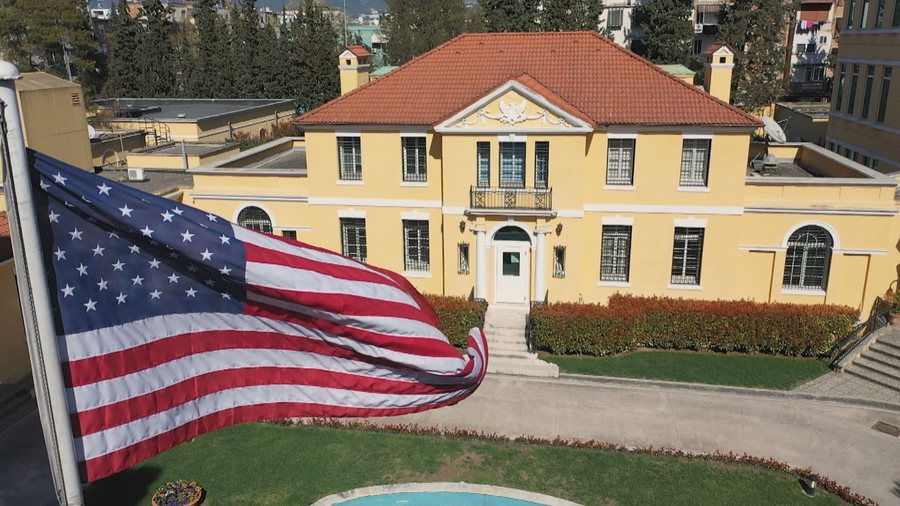
The reaction of the U.S. Embassy in Tirana carries a clear message: arson, the destruction of property and injuring people cannot be presented as civic engagement. Anyone who believes that violence will secure American understanding for the overthrow of the government should read this statement carefully. The U.S. does not support violence!
The published text contains no demand for the resignation of the prime minister, nor any call for political negotiations. It contains a clear condemnation of violence and an appeal for the peaceful exercise of the right to protest. The Embassy also calls for restraint from all sides, which includes state authorities.
Politically, this position strengthens Rama in confronting violence. It is not a declaration of loyalty to his government, but it supports the principle on which the prime minister is building his response: dissatisfaction does not give anyone the right to burn the city and impose a change of power by force.

This distinction matters. Washington does not need to say “we are with Rama” for the message to be politically favorable to the prime minister. It is enough to state clearly that violence is not civic protest. For anyone seeking to turn the confrontation in the streets into an instrument of power, this is a firm boundary.
Meanwhile, today Edi Rama, who is placing the confrontation in the field of public order and the protection of institutions, made his statement. His opposition to resignation, accompanied by his declared readiness to discuss legitimate concerns, aims to separate civic demands from destructive actions.
Students have the right to demand better education, employment opportunities and answers on corruption. The government has the obligation to listen to them and respond concretely. But none of these demands is achieved by burning a citizen’s business or attacking a police officer. The cost of destruction falls on society, while the cause of the protest loses support.
Yet it must be said just as clearly that the prime minister’s claims of a foreign hand, paid organizers or a drone attack plan with explosives require evidence and investigation. These are extremely serious accusations that cannot remain at the level of political statements. Nevertheless, the government should be able to make this evidence public, including the names of those involved, who they were, which “foreign hand” organized it, etc.
The political message is strong: nothing in the American statement amounts to support for using unrest as a path to power. This position strengthens the prime minister in defending public order, but it also places on him the responsibility to give answers to the dissatisfaction that brings citizens into the square.
Whoever has a cause must make it heard. Whoever burns must answer. And whoever seeks to govern Albania must give answers to every civic concern.
The government has flaws, but it falls through a vote!
When there are elections, do not vote and you are fine.
/SP/