







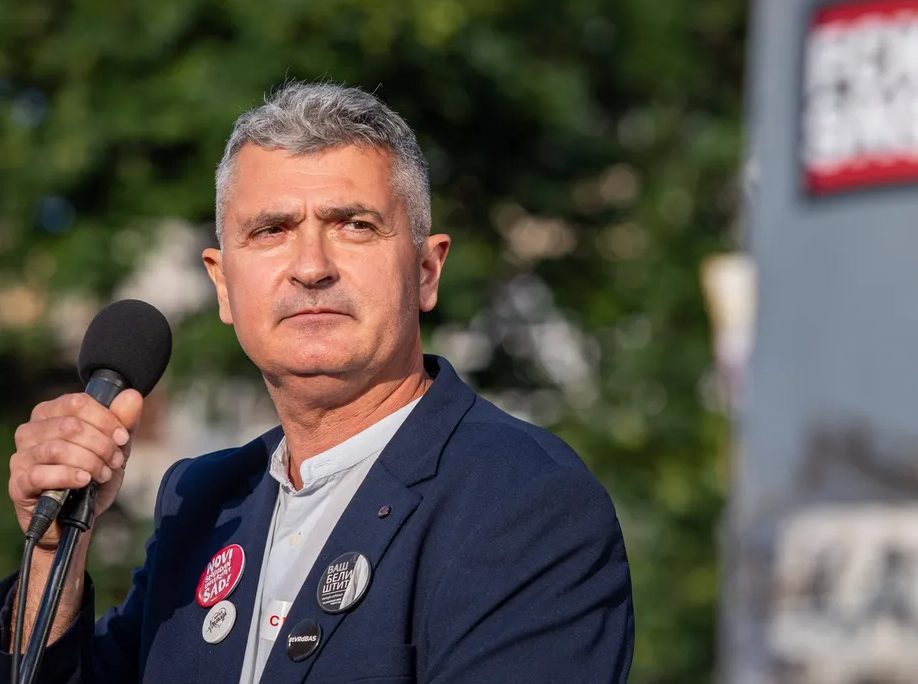
Ilija Srdanović, a cardiologist and university professor from Novi Sad, is the figure who topped the Students’ List in Serbia’s snap parliamentary elections. According to preliminary projections, this political force has left behind the list of President Aleksandar Vučić, marking an important moment for the student movement. After months of protests and demands for institutional accountability, Serbian students took their mobilization from the streets into the parliamentary race. At the head of this initiative stood Ilija Srdanović, a well-known name in the field of medicine, who became involved in political developments through protests against corruption. The Students’ List secured around 52 percent of the vote, which translates into approximately 138 seats in the 250-seat parliament. President Aleksandar Vučić acknowledged that his list had come in second. However, at the time of reporting, the final official results had not yet been published.
Who is Ilija Srdanović?
Born in 1970 in Novi Sad, Srdanović built his career in medicine and university education. He is a cardiologist, completed his doctorate in 2012 and, since 2018, has been part of the academic staff of the Faculty of Medicine in Novi Sad, where he works in the department of emergency medicine. His involvement in the student movement became more visible during the protests of recent months. In May, he spoke at rallies organized in Belgrade, while in September he took over the leadership of the independent list “Students Win”, becoming the political representative of this initiative. The move from university auditoriums and medical practice into parliamentary politics placed Srdanović at the center of a development that aims to change the political balance in Serbia.

Protests that turned into a political movement
The student movement gained momentum after the November 2024 tragedy in Novi Sad, when the collapse of the canopy at the railway station caused the deaths of 16 people. The event triggered wide public reactions and protests, through which students demanded transparency, institutional responsibility and measures against corruption. Over time, the students’ demands took on a broader political dimension. Beyond protests, the movement decided to contest the elections, aiming for direct representation in parliament. During a meeting with students in Novi Sad, where he was presented as a candidate, Srdanović spoke about the need for a new path for the country and for a greater role for the young generation in decision-making.
What does the students’ program foresee?
The platform of the Students’ List includes decentralization of the health system and placing national interests first. Immediate integration into the European Union does not appear as the program’s main priority. These positions show that the movement’s challenge is not only about representing civic dissatisfaction, but also about determining the priorities it would pursue if it takes part in governing the country.
Will Srdanović become Serbia’s new prime minister?
The reported preliminary result places the students in an important position in the Serbian parliament. However, moving from electoral victory to forming a government requires the completion of the official process and the determination of how a parliamentary majority will be formed. For Srdanović and the movement he represents, the next challenge will be turning the demands of the protests into concrete policies and institutional decisions. From a figure of academia and medicine, Srdanović has become a central name in political developments in Serbia. Whether he will take the helm of the government will depend on the next institutional steps and on the formation of the new government.