







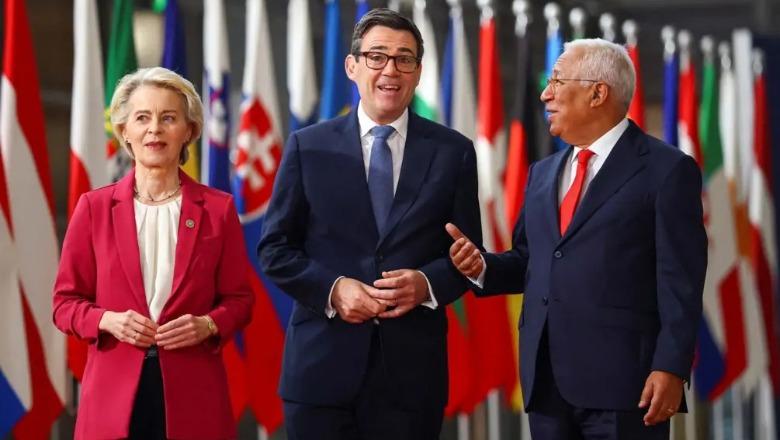
Ten years after Brexit, the United Kingdom and the European Union have agreed a new deal covering food exports, youth mobility and carbon emissions. The youth mobility scheme will allow people aged 18 to 31 to work, study or travel in the European Union for up to three years, and vice versa for EU citizens who wish to come to the United Kingdom.
Burnham called it a “historic moment” and a good day for Britain and Europe. He added that the deal benefits both sides and is the wish of the British people. Each year, 100,000 British nationals and 100,000 EU citizens will be able to take part in the scheme. The number of participants, both for those coming from the EU to the United Kingdom and for those travelling in the opposite direction, will be divided among member states based on each country’s population.
Initially, participants from the United Kingdom will apply to travel to a specific EU country, but later they will be able to move to another country. During the three-year period, they can stay in a total of three different countries. However, before moving to another country, they must stay at least 12 months in the first country. Neither British nor EU citizens will be entitled to benefit from social assistance schemes during their stay abroad and will not be able to be accompanied by dependants, such as children.

Participants will have to pay an application fee and prove that they have sufficient financial means to cover their expenses during their stay. As for the agreement on reducing tariffs on food product exports, Prime Minister Burnham told the British that “this is for you” and that the past decade has been the hardest for young people. “We need to do something serious about this issue,” he said.
Ursula von der Leyen described it as a “great success” and said she was convinced that it would lower costs for consumers. “This is a great success. It is a reciprocal relationship in which both sides benefit,” she says, adding that the agreement will bring lower costs for consumers. As for emissions, von der Leyen said negotiations on linking carbon markets with the aim of reducing emissions have been completed. She stressed that this will reduce “excessive dependence on imported fossil fuels”.
The EU and the United Kingdom have also reached an agreement on migration, called the “English Channel Action Plan” (Channel Action Plan), which aims to tighten measures against illegal crossings through the English Channel. Burnham said the agreement will give the British economy a boost of 17 billion pounds and contribute up to 0.5% to the United Kingdom’s GDP. He described it as “the single biggest measure to boost economic growth that we could undertake during this parliamentary term”.
The issue of tuition fees remains unresolved, with negotiations ongoing. The President of the European Council, António Costa, said that the European Union remains open to having “the closest possible relationship” with the United Kingdom, but stressed that the war in Ukraine is one of the biggest challenges facing the European bloc.