







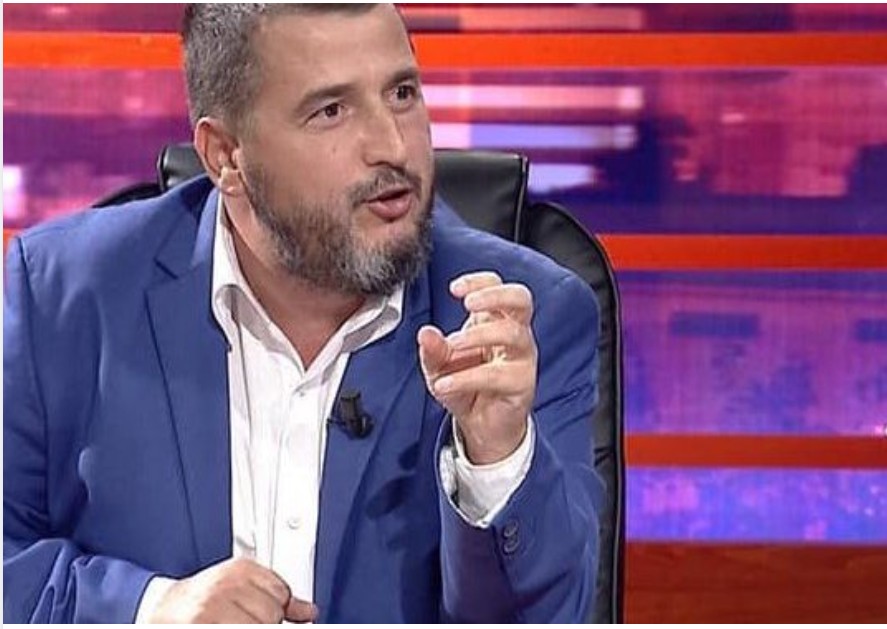
By Dr. Arben Ramkaj
Whereas most of us are holding our breath, waiting to see what happens after the results of the partial elections in the US, and whether the US and Israel will attack the Islamic Republic of Iran once again, others are horrified by international reports about the possibility of a controlled nuclear strike on Iran, especially against atomic uranium enrichment facilities.
These concerns have been raised publicly by the well-known American journalist Tucker Carlson, while Iranian television has also discussed the possibility of such an attack and the precautions citizens should take in the event of the use of nuclear weapons. These are reported scenarios, not confirmation that a decision for such an attack has been made. But the very fact that they are being discussed shows how dangerous the situation has become.
Following Al Jazeera with a heavy heart, I cannot help but think about the consequences of such an escalation. I believe it would turn the Middle East from a blessed land of peace into a land of war and human barbarity. The consequences would not be limited to this region; they could spread to the Mediterranean and beyond. The Balkans are not immune to these developments either, because a confrontation of this scale would affect the security, economy and lives of millions of people.
Nevertheless, human wisdom has not yet exhausted its opportunities to prevent a major war. In a region where, whenever a fire breaks out, no one seems able to put it out, there is a small place, an emirate called Qatar, which has taken on the task of influencing the fate of that geographic space and, why not, also the developments that affect the whole world.
At the head of this state stands His Highness Emir Sheikh Tamim bin Hamad Al Thani. His people have called him “Tamim the Magnificent” because of his stance during the political crisis of several years ago, when he defended the country’s sovereignty and national dignity. As for me, recognizing his role in international mediation, in bringing peoples closer and in efforts to prevent conflicts, I would dare to call His Highness “Tamim of Human Harmony.”
This assessment relates to the way Qatar has made economic and diplomatic resources available for solving human problems. From the difficult process in Afghanistan to the Syrian issue, from mediation for the release of hostages and prisoners to efforts to halt the war and ease the humanitarian crisis in Gaza, Doha has consistently sought paths to dialogue, even in situations where the parties seemed unable to come closer.
Today, this experience takes on special importance in the face of tensions between the United States and Iran. While I am writing these lines, reports are circulating about diplomatic contacts with Tehran and a recent Iranian proposal aimed at an understanding with Washington. Among the issues mentioned are the immediate reopening of the Strait of Hormuz, reducing tensions and creating conditions for ending the war. The details of these contacts require official confirmation, but every real opportunity for talks should be taken seriously.
Of course, there are groups and interests that do not want such a solution. The history of world diplomacy knows interventions by distinguished figures to reduce tensions and end conflicts. Yet what draws my attention is the persistent effort of such a small and peace-loving state to use a significant part of the wealth that God has bestowed upon it in the service of peaceful agreements. At a time when many countries spend vast resources preparing for war, Qatar is also investing to prevent it.
This choice has not been without cost. Its human value has not always been given the recognition it deserves; on the contrary, the country has faced political, economic and security consequences during regional crises. We must remember how a sovereign state can be attacked in broad daylight by another member state of the United Nations, as happened with the Israeli strike on Qatari territory. Likewise, Iranian attacks on oil and gas infrastructure have shown how easily the economic stability of the region can be put at risk.
Against this backdrop, we must not forget the campaigns against Doha over its role in the humanitarian crisis in Gaza. Despite criticism and pressure, mediation efforts have continued. This does not mean that every diplomatic initiative has been successful or that every policy is beyond criticism, but that keeping channels of communication open remains essential even in the most difficult circumstances.
This very persistence may constitute one of the most important historical legacies of this state. Many countries with limited territorial dimensions are known for their wealth and development, such as Singapore, Switzerland and Norway, each with its own international identity. Qatar, alongside its economic development, is trying to leave its mark through mediation and by putting out the fires of conflict. Perhaps this is where one of the values of diplomacy lies: to build bridges of communication where others see only confrontation.
I hope these efforts contribute to preventing a human catastrophe, a frontal confrontation in the Middle East whose consequences could extend well beyond its borders. In the end, the value of diplomacy is measured not only by the agreements that are signed, but also by the wars that are prevented and the human lives that are saved. If Qatar’s engagement helps avert another catastrophe, this will be a contribution that deserves to be recognized and remembered.
Because history is written not only by those who win wars, but also by those who manage to prevent them.
Dr. Arben Ramkaj
Chairman of the Albanian Institute for Interfaith and Cultural Dialogue
Vice President of the European Muslim League
Program Director for the Middle East and the Muslim World at the Albanian Institute for International Studies (AIIS)