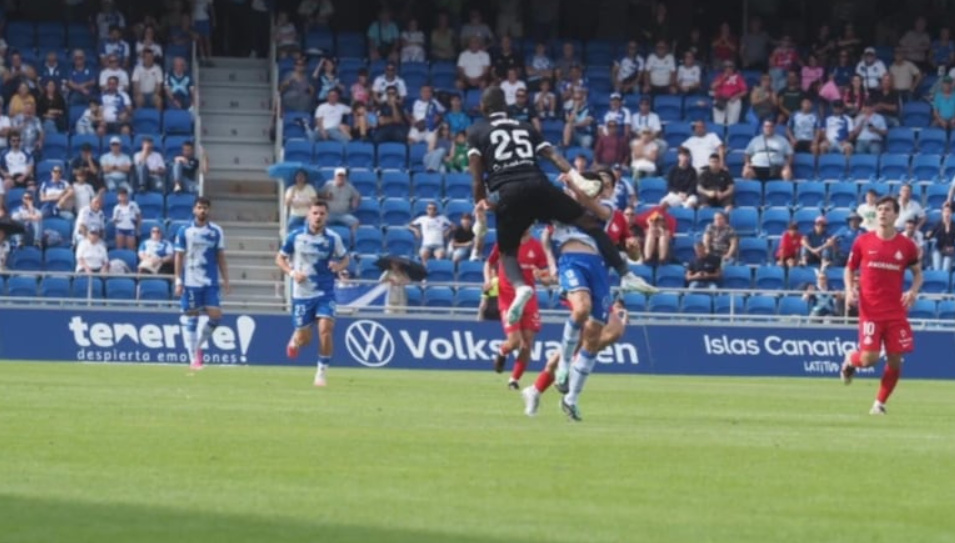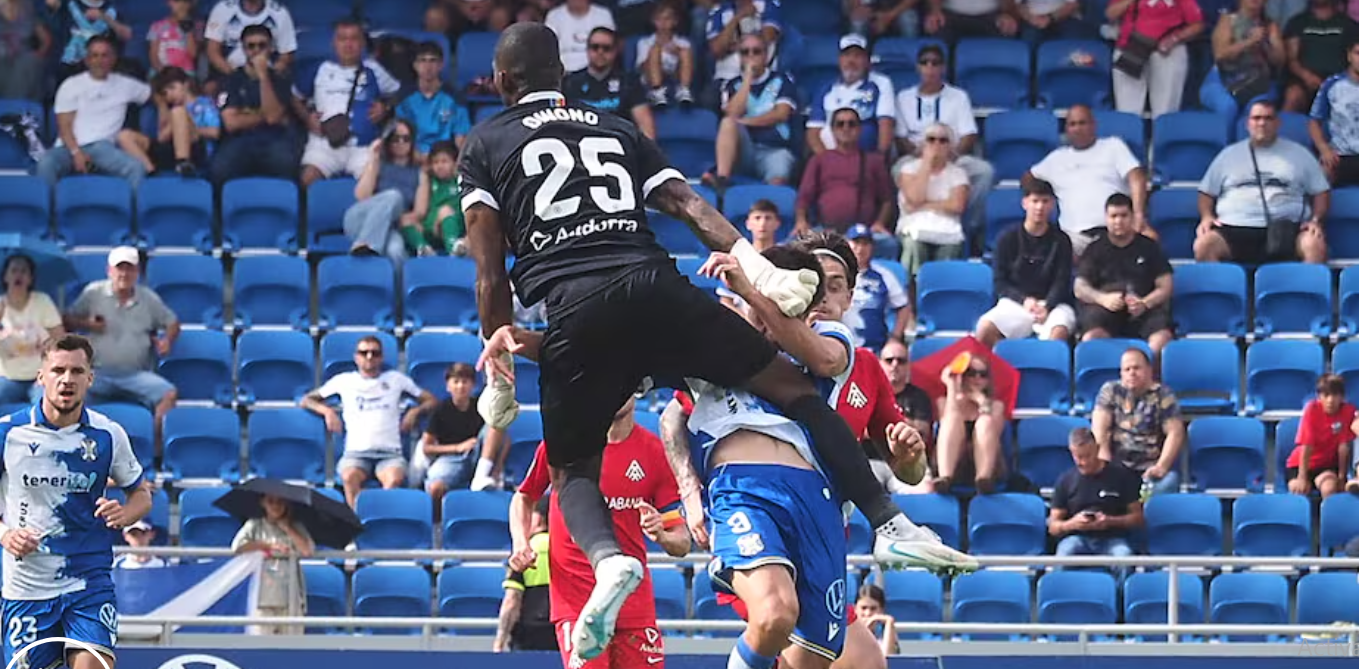
The Spanish football community has been shaken by the death of Tenerife striker Jesús de Miguel following a severe collision during the match against Andorra. The 30-year-old footballer collapsed unconscious on the pitch and was rushed to hospital, where he died the following morning. So, unlike the version that has been circulating, the death was not confirmed at the stadium.
The incident occurred on 2 November at the “Heliodoro Rodríguez López” stadium, during added time in the match, with the score at 2–2. De Miguel was chasing a long ball to launch a counterattack, while Andorra’s goalkeeper, Jesús Owono, came far out of his area to intercept the play. During the collision, the goalkeeper’s knee struck the striker in the chest, knocking him to the ground. The referee sent Owono off with a red card and the match was ultimately stopped.
Following the incident, De Miguel suffered a cardiorespiratory arrest. Medical services intervened and the footballer was taken by ambulance to the “Nuestra Señora de la Candelaria” university hospital, where he was admitted to intensive care. Initially, Tenerife announced that his condition was stable, though serious. During the night, the club reported a deterioration in his neurological condition. Death was confirmed on 3 November at 08:00 local time.

According to reports on the preliminary autopsy, the cause of death is linked to an accidental chest trauma. However, this finding must be supplemented with the results of other examinations and with the final forensic report. For this reason, the event should not be described simply as a spontaneous heart attack, without taking into account the severe blow that preceded the cardiorespiratory arrest.
The tragedy has also raised questions about how first aid was provided. Authorities are examining exactly when the cardiac arrest occurred, when resuscitation efforts began, and why the ambulance did not enter the playing field. These questions are part of the investigation.
Spanish police have opened investigations to clarify the circumstances of the death. Opening the procedure does not automatically imply fault on the part of the goalkeeper or medical staff, as deaths from non-natural causes are subject to judicial review. Meanwhile, clubs, footballers and sports organisations have expressed condolences to the family and to Tenerife. A collision during play ended in a tragic loss, and the investigations must provide final answers as to what happened.