







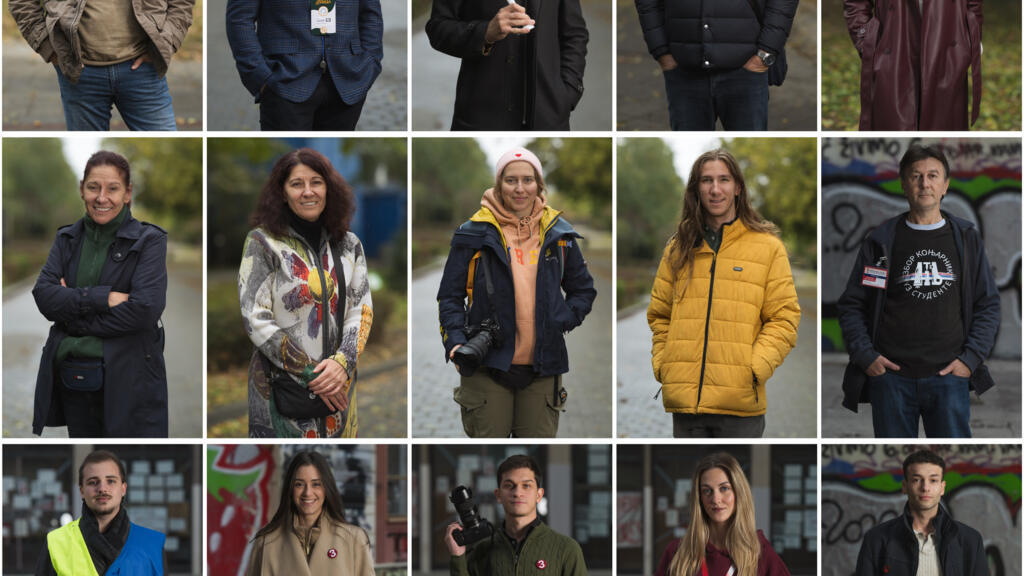
The student movement in Serbia, which culminated in a sweeping political victory, began in November 2024 after a concrete canopy collapsed at the renovated railway station in Novi Sad, killing 16 people. The tragedy sparked nearly two years of mass protests, which channelled Serbians’ anger over corruption and turned into calls for early elections. When the elections were held on 25 October, the “Student List” won 140 of the 250 seats in parliament, a result sufficient to govern alone and marking a profound political change. The victory brought to the fore a new generation of activists and professionals, who challenged the status quo with a unique and united approach.
Vukashin Gjinoç, a student at the Faculty of Sciences in Novi Sad, told AFP that the movement survived “through unity and by not putting individuals in the foreground”. He stressed that “we were all equal”, a strategy that also served to avoid being targeted by pro-government media, which “constantly tried to find leaders in order to break up the organisation”. This principle later also shaped the student list that won the elections. Candidates were chosen by students in faculty assemblies, most of them academics and professionals with little or no political experience. Gjinoç added that they “were not selected based on party membership or loyalty, but only on their moral and professional integrity”.
Aleksa Stankoviç, a philosophy student in Belgrade, spent two years photographing the movement, documenting everything from meetings and marches to the way police treated protesters. He recalls: “They called us terrorists, they insulted us, they tried to blackmail us. But they had nothing to blackmail us with. We are young, we study, we don’t even have jobs yet.” Stankoviç stressed that they remain “a critical mass that will keep a close eye on the people we elected”. This reflects a continuing commitment to accountability and oversight of the new government.

Strahinja Stankoviç, a political science student from Belgrade, expressed his relief after two years: “After two years, I can finally feel calm. Now I can sleep peacefully, and my mum and dad can also rest a little.” He helped organise the first student march towards Novi Sad, part of a campaign in which students walked hundreds of kilometres on foot to reach areas largely under the influence of pro-government media. In June 2025, he was arrested at a road blockade in Belgrade and spent hours handcuffed on the ground, a testament to the challenges and repression they faced.
For Nikola Maroviç, a professor at the Faculty of Technology in Novi Sad, two years of supporting students have left him “almost completely emotionally drained”, but proud. He expressed a sense of dignity for the first time, saying: “For the first time, I truly feel dignified to have taught the students who were on the streets.” Maroviç concluded with a powerful message, stressing that “we don’t need one leader in this country. We need millions of little leaders – and that is what we gained in this movement,” highlighting the collective and decentralised nature of their success.
Source: France 24 Live News