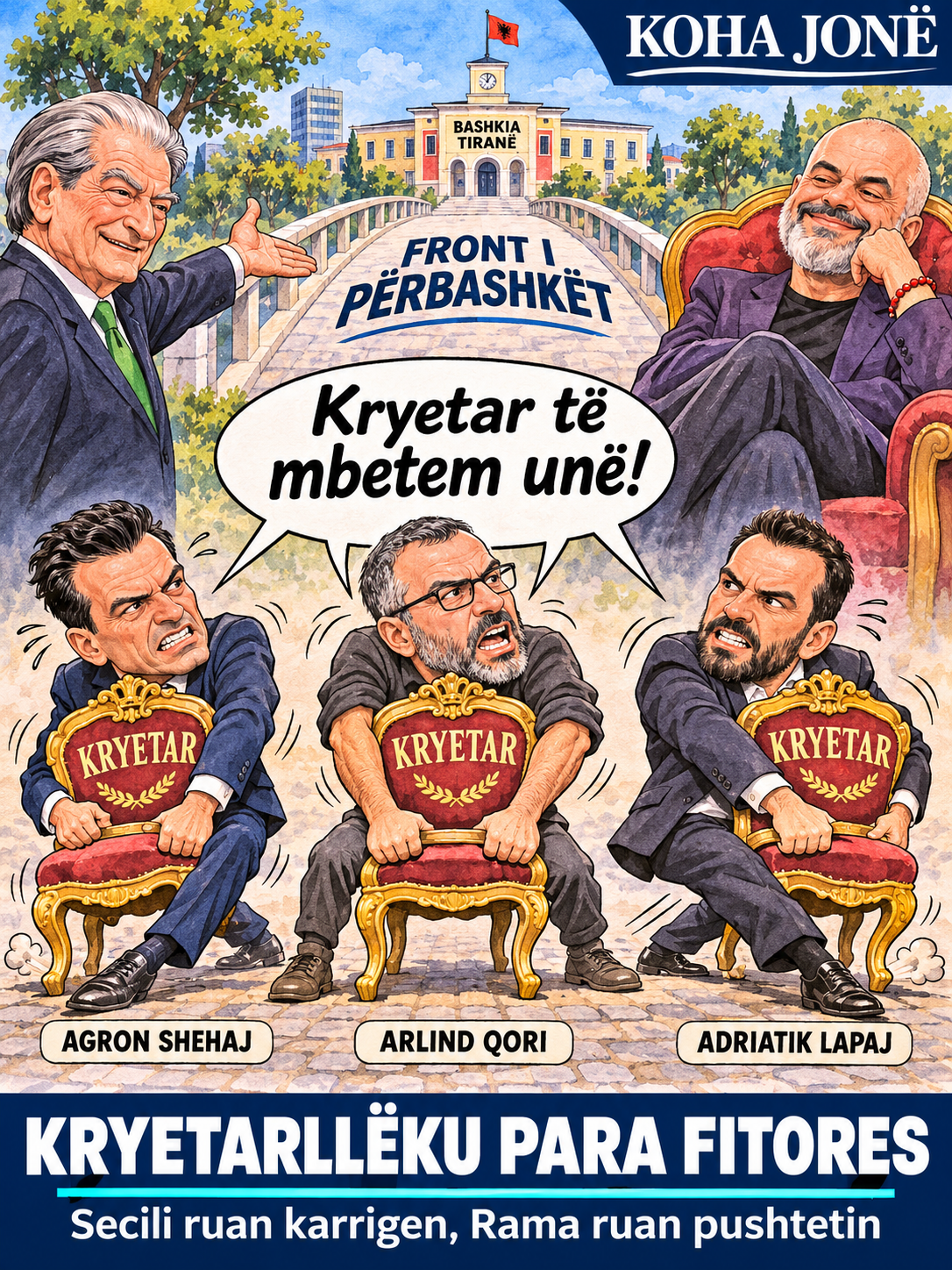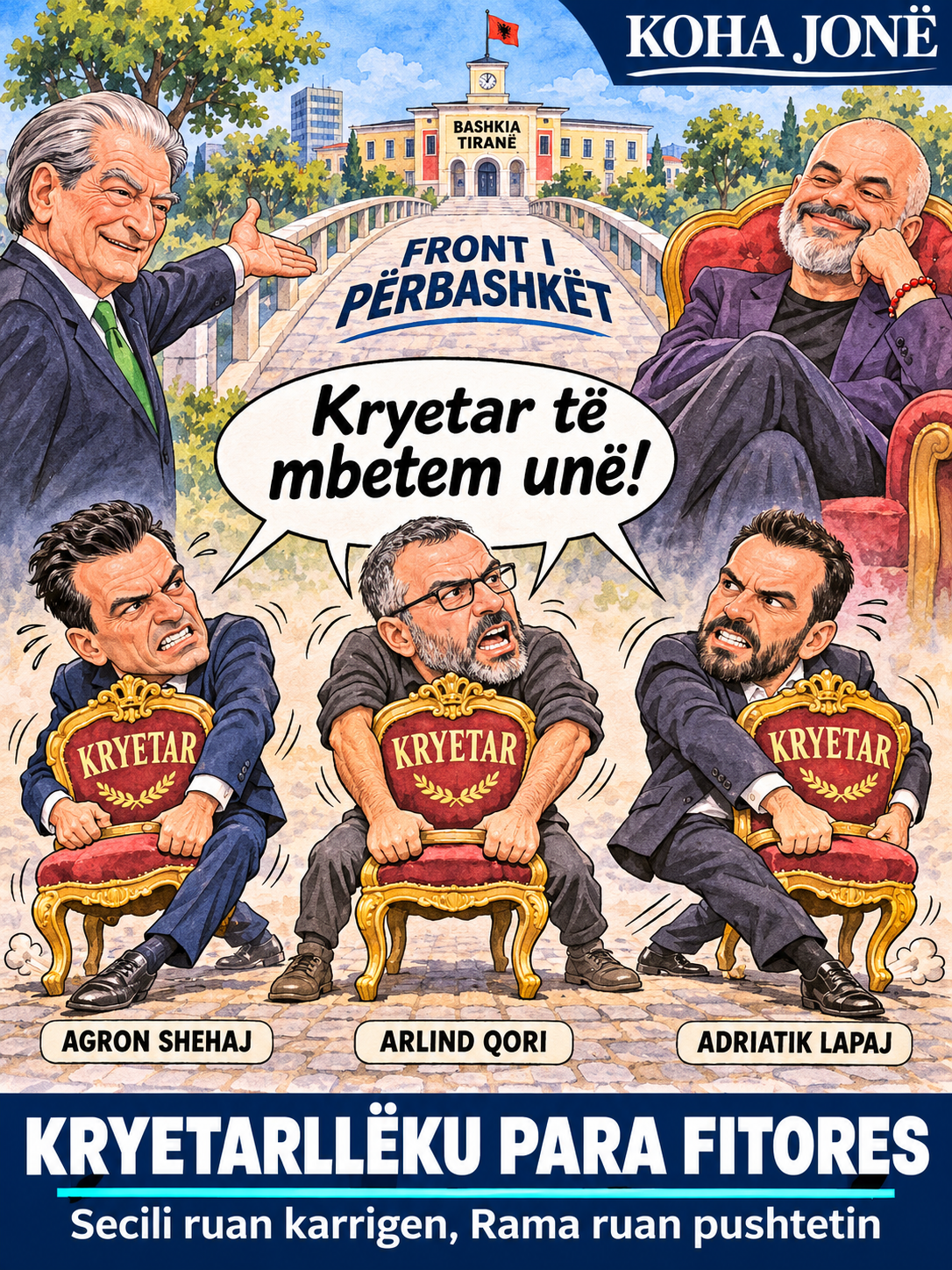
The Albanian opposition risks losing another battle before citizens even reach the ballot box. The reason is the inability of the government’s opponents to turn public dissatisfaction into a common alternative. Each wants change, but change seems to be accepted only when it carries his own name.
Sali Berisha’s call for joint candidates in the local elections must be put to the test. It must be discussed publicly who chooses the candidate, how support is measured, and what guarantees there are that he will serve the citizens. These are serious political conditions. The clash over who leads the other party closes the conversation before reaching the main problem: how is the municipality won, and how is it governed better?
Agron Shehaj, Arlind Qori and Adriatik Lapaj have the right to oppose Berisha. No one asks them to forget their criticism of him or to give up their convictions. But citizens have just as much right to ask: after ruling out cooperation, what is your plan to win?

A “no” to Berisha is still not a strategy to defeat Rama.
The chairman of the Democratic Party is chosen by Democrats and their structures. The new parties may consider that choice wrong. But if every agreement is conditioned on replacing the leader of the partner, then cooperation becomes practically impossible.
The solution must be sought in the candidate and in the rules. A transparent selection, integrity criteria, a common program and guarantees for the candidate’s independence would place the debate on concrete grounds. Parties can remain different and still support the same person to lead the city.
Berisha’s responsibility here is direct. If the offer is serious, he must accept a procedure that is not controlled by the Democratic Party and a candidate who does not take orders from it. He must also accept the possibility that the most convincing name be proposed by those who criticize him most harshly.
If he dictates the name, the offer falls. If he demands political submission, the others have the right to walk away. But if he accepts equal rules, the refusal must be explained beyond the sentence: “I do not cooperate with Berisha.”
Tirana cannot be treated as a test of strength among opposition leaders. It is the city of people who expect services, transparency and accountability. The candidate must be chosen for the ability to run the municipality and to expand civic support.
The new parties must prove that they bring a different political culture. A party’s age does not automatically make its conduct new. If personal candidacies become non-negotiable and every compromise is called treason, we have the same old 35-year-old habit, where everyone wants to be the “mind” for the others.
Berisha must make the offer concrete, and the new parties must challenge it with clear conditions. Let it be seen publicly who accepts rules and who seeks only control.
Otherwise, the outcome may be bitter: each leader will declare that he kept his principles, each party will count its own votes, while Rama will count the municipalities with a majority.