







If Democrats win control of the U.S. House of Representatives or the Senate in Tuesday’s midterm elections, the last two years of Donald Trump’s presidency will look markedly different from the first half. But what could Democrats realistically do with control of one or both chambers of Congress?
If Democrats take the House, Republicans would lose their ability to pass legislation through that chamber without Democratic support. A Democratic majority could launch investigations into the administration, demand documents and testimony, and subject senior officials to sustained congressional scrutiny. They could also come under pressure from their base to impeach Trump for a third time.
The Senate confirms cabinet officials, ambassadors and federal judges, including Supreme Court nominees. A Democratic majority could block or delay many of Trump’s appointments and force the White House to negotiate over legislation. Even if Republicans keep one or both chambers, a reduced majority could make governing more difficult, especially when legislation requires near-unanimous support from their own party members.

Political journalist Joseph Gedeon has outlined the most significant investigations Democrats could launch if they win Congress. Among them is family business, where Robert Garcia, the ranking Democrat on the House Oversight Committee, has named corruption in the Trump family as his top priority. Meanwhile, Representative Jamie Raskin has requested information about the business dealings of Trump’s son-in-law, Jared Kushner, and Donald Trump Jr.
Another major issue is Epstein and the emails. Thanks to a joint effort by Representatives Ro Khanna and Thomas Massie, the Justice Department was compelled to release millions of files related to Jeffrey Epstein last year. However, the Justice Department missed the legal deadline for releasing the files. It then published only about 3.5 million pages out of the 6 million it had in its possession, stating that the remainder were duplicates. There have also been bipartisan concerns about heavy redactions in some places and the apparent accidental disclosure of victims’ names in others. The Justice Department is now facing a lawsuit from journalist Katie Phang over many of these issues. Even under a Republican-controlled Congress, the Oversight Committee, chaired by Republican James Comer, has been a rare point of bipartisan cooperation, with members from both parties regularly (but not always) working together to subpoena witnesses and hold them in contempt when they fail to cooperate. This is expected to continue in any new Democratic Congress.
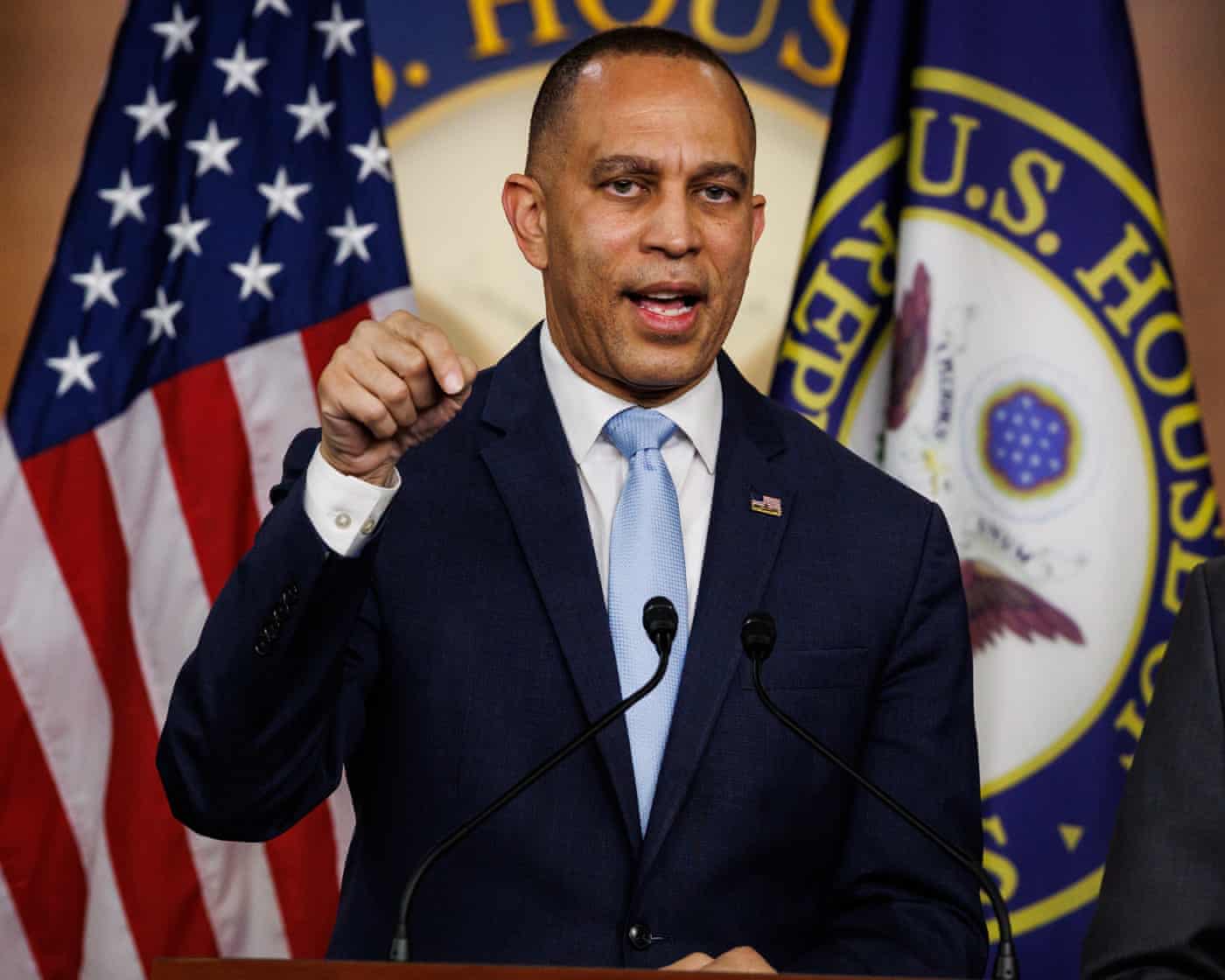
The Pentagon and the war are also in focus. Jason Crow, a congressman from Colorado who sits on the Armed Services and Intelligence committees and co-chairs the House’s anti-corruption caucus, says he will start with the Pentagon, citing defense contracts directed toward companies linked to the Trump family. On impeachment, the House minority leader, Hakeem Jeffries, says Democrats have ruled nothing out this time, while House Republican majority leader Steve Scalise predicts an attempt “on Day 1”.
In 2018, midway through Trump’s first term, Democrats took control of the House of Representatives in a broad blue wave. House committees quickly launched dozens of investigations into his businesses, the handling of the Russia investigation and potential conflicts of interest. A little over a year after the 2018 midterms, following months of calls from the left for impeachment, the House voted largely along party lines to impeach Trump. Democrats had accused Trump of pursuing a scheme to cheat in the next presidential election by pressuring Ukraine to produce damaging information about Joe Biden, and then obstructing congressional oversight. Trump was later acquitted by the Republican-controlled Senate on both articles of impeachment. In 2021, Trump was impeached – and acquitted – a second time for incitement of the January 6 attack on the U.S. Capitol.
Taken from The Guardian US