







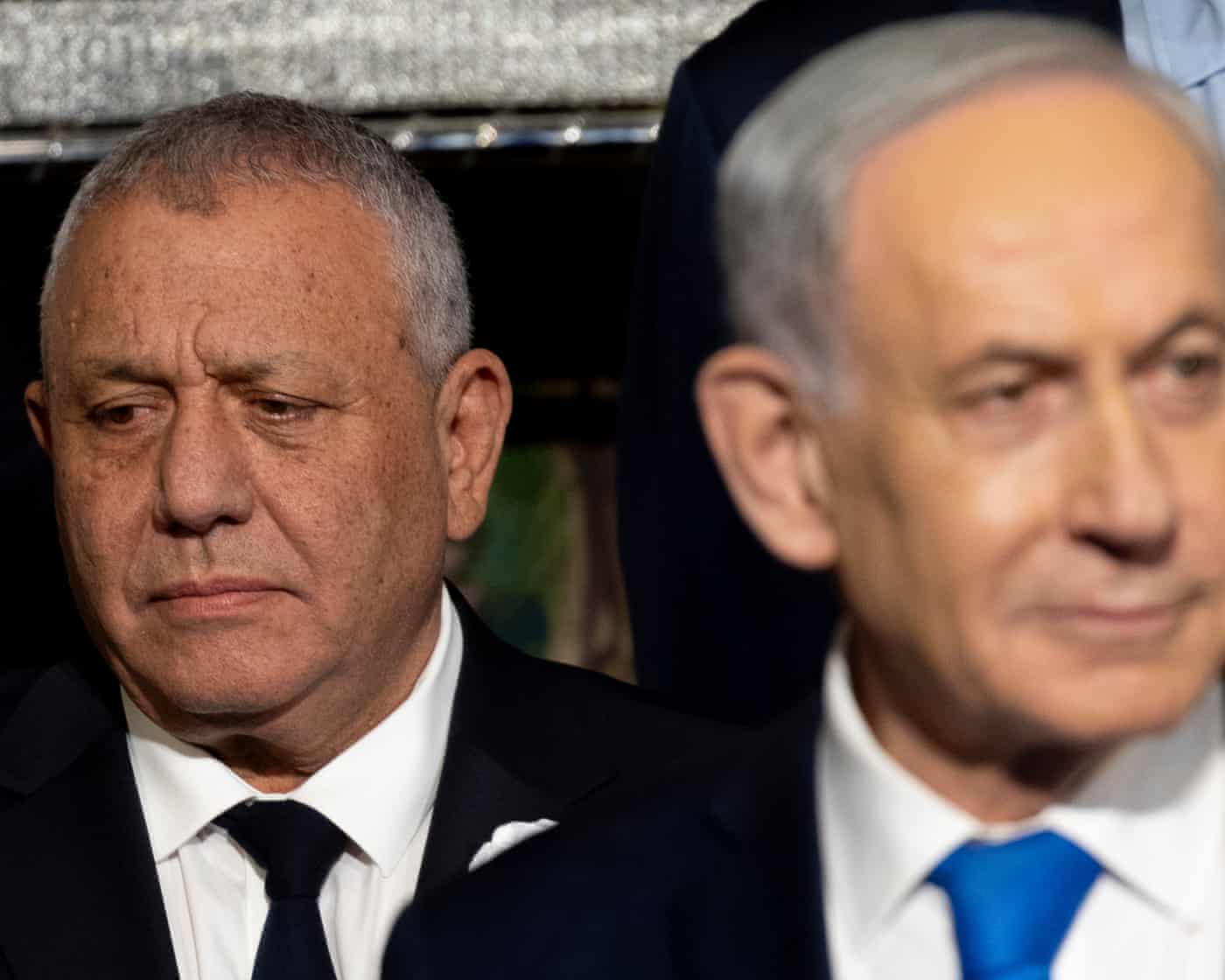
Gadi Eisenkot, the former general aiming for the post of Israeli prime minister, appears to have distanced himself from forming a unity government with Benjamin Netanyahu after talks between them. Their meeting, held on Sunday morning, was intended to discuss a unity government with a rotation for the prime minister’s post, almost three weeks after President Isaac Herzog tasked Eisenkot with forming the government after the October elections. A source from Eisenkot’s centrist Yashar party confirmed that the talks ended because of sharp disagreements with Likud, stressing that Eisenkot offered Netanyahu the chance to join his government once it was formed.
The proposal for a rotating premiership came from Netanyahu, a day after Eisenkot pledged to announce the new government by December 6, without extension. Netanyahu wrote on social media that he was willing to accept Eisenkot serving first as prime minister, while he would be deputy prime minister. In the latest elections, pro-Netanyahu forces won 53 seats, while Eisenkot’s bloc won 48, leaving both without the required majority of 61 seats in the Knesset. Eisenkot, known for his anti-corruption campaign, has denounced Netanyahu as unfit and condemned the “racist campaign” against Arab citizens. He also accused Likud of delaying coalition talks to trigger new elections.
Eisenkot’s camp has faced internal divisions over possible alliances with ultra-Orthodox parties, Arab lists, or the formation of a unity government with Likud. Netanyahu’s opponents called his rotation offer a “transparent trick.” Eisenkot’s Yashar party has reached coalition agreements with the Democrats and Yisrael Beiteinu, securing a total of 36 lawmakers, far short of the 61-seat majority.
A significant development occurred on Saturday when Mansour Abbas, leader of the Arab-Israeli Ra’am party, recognized Hamas as a “terrorist group.” This move could pave the way for his party to join a coalition led by Eisenkot, after the latter had made this designation a precondition. Abbas stressed that the goal was to form a four-year government, not merely replace Netanyahu’s. However, some of Eisenkot’s allies have expressed opposition to support from majority-Arab lists.
Meanwhile, Britain, France and six other countries called on Saturday for the delayed Palestinian legislative elections to be held in the first three months of 2027. They stressed that the vote was “essential” for “democratic renewal” and “inseparable from preserving the two-state solution.” Palestinian President Mahmoud Abbas postponed the legislative elections until September next year, blaming “obstacles imposed by Israeli measures,” while Israel denied any responsibility.
Source: The Guardian