







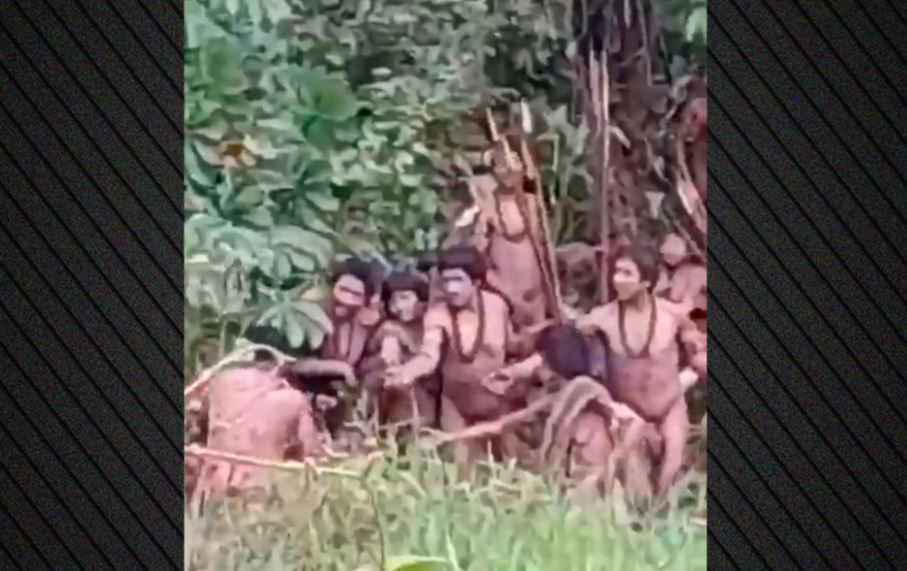
About 20 members of the indigenous tribe Awá, who were living in voluntary isolation in the tropical forest of the Amazon, suddenly appeared on Monday in a village in Brazil. The appearance caused concern among indigenous groups over the conditions that may have driven them to leave the forest. According to the NGO Survival International, they arrived at a village in the Arariboia indigenous protected area, in the northeastern state of Maranhão.
This is one of the rare cases when the isolated Awá tribe leaves the forest and comes into contact with outsiders, and the circumstances of the appearance remain unclear to the authorities. The isolated Awá tribe lives in voluntary isolation and any unplanned contact with outsiders poses a risk to their health, according to indigenous organizations.
The area is also home to members of the Guajajara tribe, who welcomed the visitors and offered them food. “They asked for sweet potatoes and took them with them into the forest,” Survival International reported, calling the encounter brief. The video recorded by villagers and published by the same organization shows men, women and children at the edge of the forest, their bodies partly hidden by dense vegetation, naked and wearing ornaments, while the men carry long bows and arrows.

The health condition of some of them, especially children and the elderly, drew particular attention from villagers. Coapima, the organization representing indigenous communities in the state of Maranhão, warned that “the physical condition of some members of the group, especially children and the elderly, has caused concern among villagers, who have noticed clear signs of severe weakness.”
The same organization stressed that unplanned contact with people outside the community poses serious health risks. Isolated populations are particularly vulnerable to diseases to which they have little or no immunity. According to the director of Survival International, Caroline Pearce, Awá territories are being encroached upon from all sides and the group is being squeezed into an increasingly narrow area of forest.
Isolated indigenous communities in the Amazon, according to the same source, have been under pressure from illegal mining, logging, hunting and cattle ranching activities in recent years.