







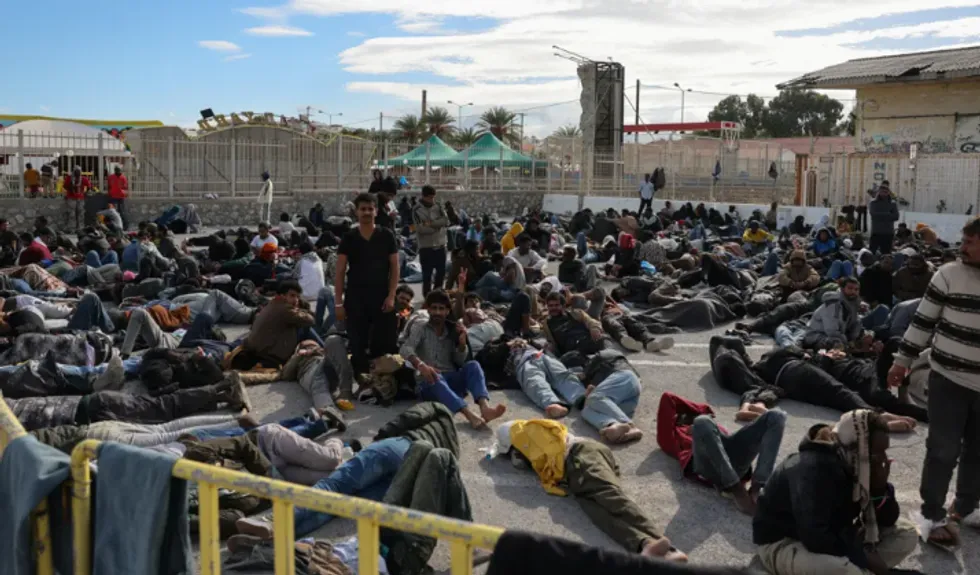
About 2,000 migrants have arrived in Crete in small boats coming from North Africa since Friday, Greek officials announced over the weekend. Minister of Migration and Asylum Thanos Plevris on Sunday called this influx the most difficult situation of the year for Greece.
The Coast Guard said that more than 1,000 people were rescued from boats near Crete and Greece’s southernmost island, Gavdos. On Gavdos, the bodies of two migrants were found on Saturday.
Crete serves as a key entry point for migrants trying to reach Europe from the Middle East and North Africa. Over the weekend, hundreds of them were sheltered in a sports gymnasium in Heraklion, the island’s capital, after local capacities were overwhelmed.
Situation out of control at Heraklion port
Regional deputy governor for social policy Stelios Vorgias stated that the situation has gotten out of control. According to him, nearly 2,000 migrants are stranded at Heraklion port, exposed to cold and possible rain.
Vorgias added that Crete, guided by a sense of humanity, is offering a temporary solution so that these people, including women and small children, do not remain exposed to rain and cold at night.
Mayor of Heraklion Alexis Kalokairinos emphasized that migrants are human beings and that human beings enjoy their rights wherever they are, under any circumstances. He called protecting this fundamental principle a full commitment.
Over 40,000 arrivals since the start of the year
In recent years, Greece has faced major difficulties in managing the increase in the number of migrants arriving in the country. According to United Nations data, more than 40,000 migrants have arrived in Greece since the beginning of this year, a figure that exceeds the number of people who arrived during all of last year.
The Greek government recently announced plans to manage arrivals, including opening a temporary reception facility near Heraklion. Greece is also one of five EU countries planning to open a center in Rwanda next year for the deportation of migrants, along with Germany, Denmark, Austria and the Netherlands.
These countries stated that the plan will apply to migrants staying illegally in their territory and who are subject to deportation. Human rights organizations say this could violate migrants’ rights, while the five countries stress that the plan complies with EU and international law.