







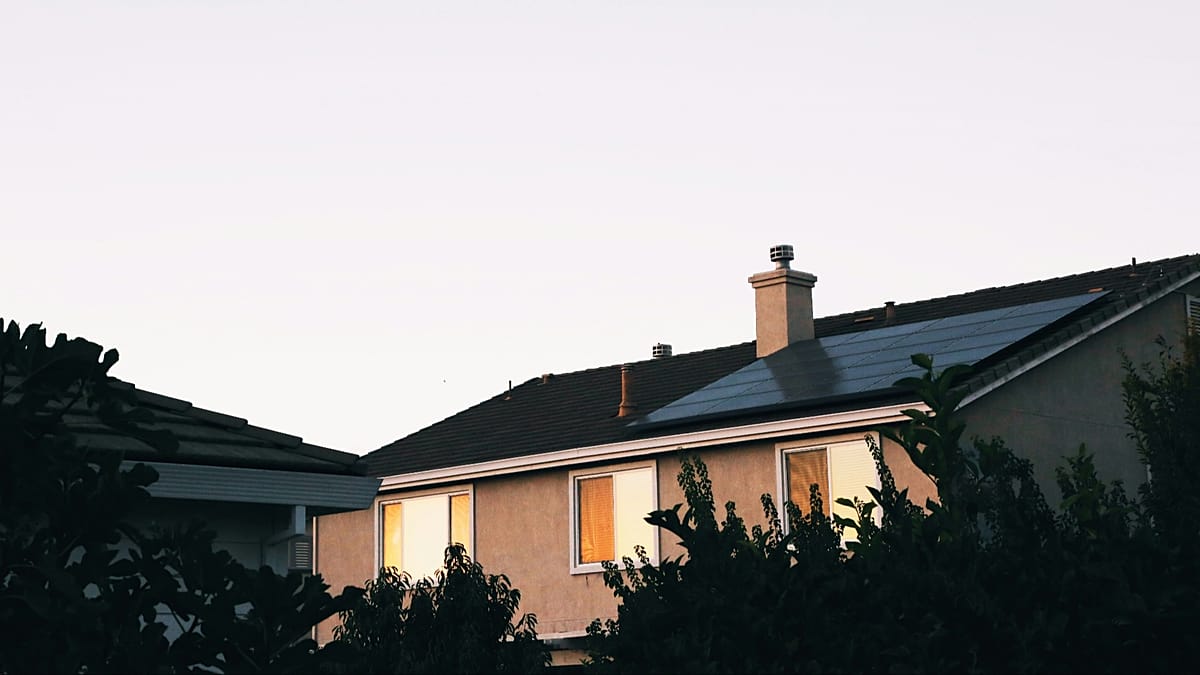
Europe is at risk of entering its first “dunkelflaute” of the year, as cloudy, windless weather sharply reduces solar power output and pushes energy prices higher. Solar energy, described as a “bright star” of the transition away from fossil fuels, is among the fastest forms of energy to install and the cheapest in the world.
Under favourable conditions, producing one unit of energy with solar panels can cost as little as 0.024 euro. This leaves coal, gas and even wind behind, according to data presented in the source material from Euronews Green, which Koha Jonë has adapted for Albanian readers.
Since the start of the war in Iran on 28 February, the sun has saved 42.9 billion euro in gas imports for the EU. It has helped stabilise the grid during summer heatwaves, when cooling demand rose sharply. However, a prolonged period of cold, cloudy and windless weather poses a serious problem for Europe’s energy system.

“Dunkelflaute”, a German term meaning “dark calm”, describes a long period when wind and solar output is low or non-existent due to a lack of wind or light. The phenomenon usually occurs from October to February in Northern Europe, worsened by short winter days, dense cloud cover and fog.
This coincides with rising energy consumption across the continent, as low temperatures drive up demand for heating. Cases of “dunkelflaute” lasting several days are rare, but when they occur, they force the European grid to rely more heavily on expensive backup generation, such as natural gas.
According to Bloomberg’s forecasts, electricity prices in Germany for Thursday, 29 October, were above 300 euro per megawatt-hour, roughly double the October average, while tariffs for evening peak hours exceeded 500 euro. Households with solar panels are also feeling the rise in bills.
A resident in the United Kingdom, who has 12 solar panels installed on the roof with a combined capacity of 6.36 kW, says that on Wednesday, 4 November, the panels produced only 10.90 kWh of solar electricity, forcing him to rely on the grid for an additional 27.40 kWh. On Thursday, 5 November, when his city was overcast all day, the home produced just 2.40 kWh of solar power and imported 20.60 kWh.
This happened even though the home has an 11.52 kWh storage battery, which is charged overnight on off-peak tariffs to be discharged during the day when consumption rises. Clouds are expected over the weekend and in the days that follow, meaning many Britons will produce significantly less solar energy than during the summer.
“We’re barely producing any energy at all,” says the resident, who asked to remain anonymous. “It’s extremely frustrating to see that we’re importing so much energy when we’ve spent thousands on a solar system. Still, we know the panels will start performing better once the clouds clear.”
It is no surprise that the sun produces most of the electricity during the summer months. In the EU, the share of solar in electricity generation reached 25.4 per cent in June, but in October this figure fell to just 13.2 per cent. The sun relies on daylight rather than heat, which means rooftop panel owners will still produce energy on cold days.
According to green energy supplier Good Energy, residential solar systems in the United Kingdom can still produce around 25-35 per cent of their annual output during winter, which “provides a good cushion for winter bills”. The decline in solar output usually coincides with an increase in hydropower generation, which began to rise in the EU last year from October.
The sun also helps offset some of the increases in energy consumption caused by heatwaves, following the sudden need to cool spaces, such as air conditioners and fans. According to the energy think tank Ember, during the heatwave at the end of June this year, daily electricity demand rose by up to 28 per cent in Italy, 23 per cent in Hungary, 14 per cent in France and 13 per cent in Spain, compared with the days before the heatwave.
Ember notes that while heatwave-driven demand rose, solar was the only major source of energy that performed “better than usual”. Compared with other days in June and July, average daily solar output during heatwaves was 17 per cent higher in France and Hungary, five per cent higher in Spain, and the same in Italy.
Another analysis by Ember found that a typical British home with rooftop solar panels produced enough energy to power an air conditioner for five hours a day during the hot period. At the same time, water-intensive energy sources such as coal, hydropower and nuclear power face difficulties during heatwaves, as scorching temperatures and lack of rainfall cause prolonged droughts.
In August, Poland was forced to reduce output from its coal plants, which require large amounts of water for cooling, after critically low water levels in the Vistula river. This temporarily removed 1.3 GW from Poland’s energy system, enough to power more than one million average households, or about two per cent of the country’s current energy capacity.