

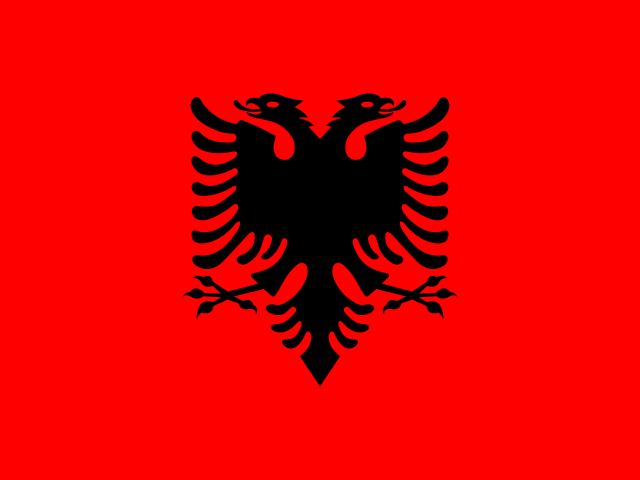





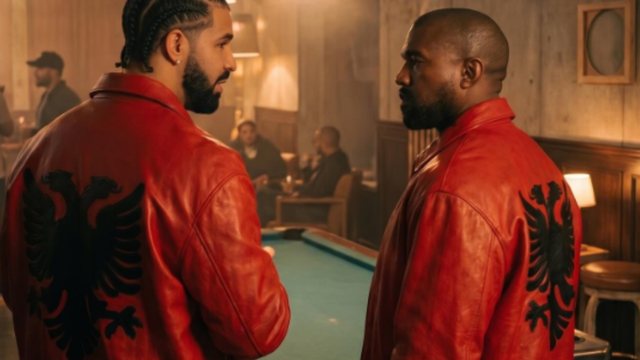
The announcement of a possible concert by Kanye West in Albania may, at first glance, appear to be a routine cultural development — a global name, a major event, an opportunity for visibility and economic gain. But beneath this surface lies a far more serious question: what are we willing to accept in the name of spectacle?
Because in this case, we are not dealing only with an artist. We are dealing with a public figure who, in recent years, has been widely criticized for repeated statements widely regarded as antisemitic. These are not isolated incidents or misunderstood remarks. They form a pattern — one that touches on some of the deepest historical wounds and contributes to a broader climate in which antisemitism is once again finding space in public discourse.
In this context, Albania is not a neutral stage. Its history is not detached from this issue — it is profoundly connected to it. During the Holocaust, when much of Europe failed, Albania stood apart. It sheltered, protected, and saved Jewish lives. This is not merely a point of national pride; it is a moral legacy — one that carries weight and responsibility in the present.

That is precisely why this moment matters. A concert is not just music. It is a platform. It is visibility. It is, inevitably, a form of legitimization. And when that platform is given to someone whose public voice has repeatedly included rhetoric that targets a specific community, the question is no longer about taste or artistic preference. It becomes a question of values.
Some will argue that art should be separated from the artist — that audiences come for music, not for ideology. This argument, while not without merit in certain contexts, becomes increasingly fragile when the artist’s public influence is inseparable from statements that carry real social consequences. In today’s interconnected world, where influence is amplified instantly and globally, public figures cannot be reduced to their art alone.
History has taught us that the normalization of hate rarely happens abruptly. It begins with minimization. With excuses. With the quiet acceptance of what should never be normalized. And it is precisely in these moments — seemingly small, culturally framed decisions — that societies reveal their true standards.
Albania holds a rare moral capital in this regard. It is a country that, at a defining moment in history, chose humanity over indifference. But moral capital is not permanent. It must be preserved through conscious choices. It requires consistency between what a nation celebrates about its past and what it allows in its present.
This is not a call for cultural isolation. Albania should remain open, dynamic, and engaged with the global cultural scene. But openness should not come at the cost of moral clarity. A confident society is not one that accepts everything without reflection, but one that knows where to draw the line.
Public institutions, event organizers, and citizens alike share responsibility in shaping that line. This is not merely a matter of market demand or entertainment value. It is about the message being sent — to ourselves and to the world — about what we are willing to stand for.
Ultimately, this is not just about one concert. It is about identity. It is about memory. It is about whether Albania, in the 21st century, remains faithful to the values that once defined its courage.
And sometimes, the strongest statement a society can make is not through what it hosts — but through what it chooses to refuse.